Balancing Independence with Inter - Dependence
"As children grow up to be worldly inquisitive and indulgent, it is necessary to lay the foundation of discrimination, rather than a dominating the makes them revolt! Later self discipline naturally follows discrimination,"...
Sage Vasishta counseled King Dasharatha - (as narrated by Valmiki in the ‘Ramayana’)
Collective Living
Bracing Attitudes from ‘Me’ to ‘We’
In their anxiety to reach the top, most people Endeavour to develop their brains and bodies, forgetting the fact that a ‘whole person’ always includes feeling, emotions, competencies, attitudes and spirit. Essential human competencies such as self-confidence, self-reliance, self-restraint along with appropriateness of emotion have a large bearing on the success of an individual. Behavioral scientists advocate that individuals can achieve complete emotional balance only through ‘community living’ - during the growing year. Very often, innocent expression of parental love beyond a certain age, keeps children trapped in a ‘childish dependency’ - making them naive and helpless and in love with themselves! When ties are cut from both parents at an appropriate age and the child learns to grow independently in a community; a transformation occurs! Children learn that: ‘They will receive as much as they give and realize that Freedom and Responsibility are two sides of the same coin! This evolution will make their future roles in career and society more mature, fulfilling and successful.
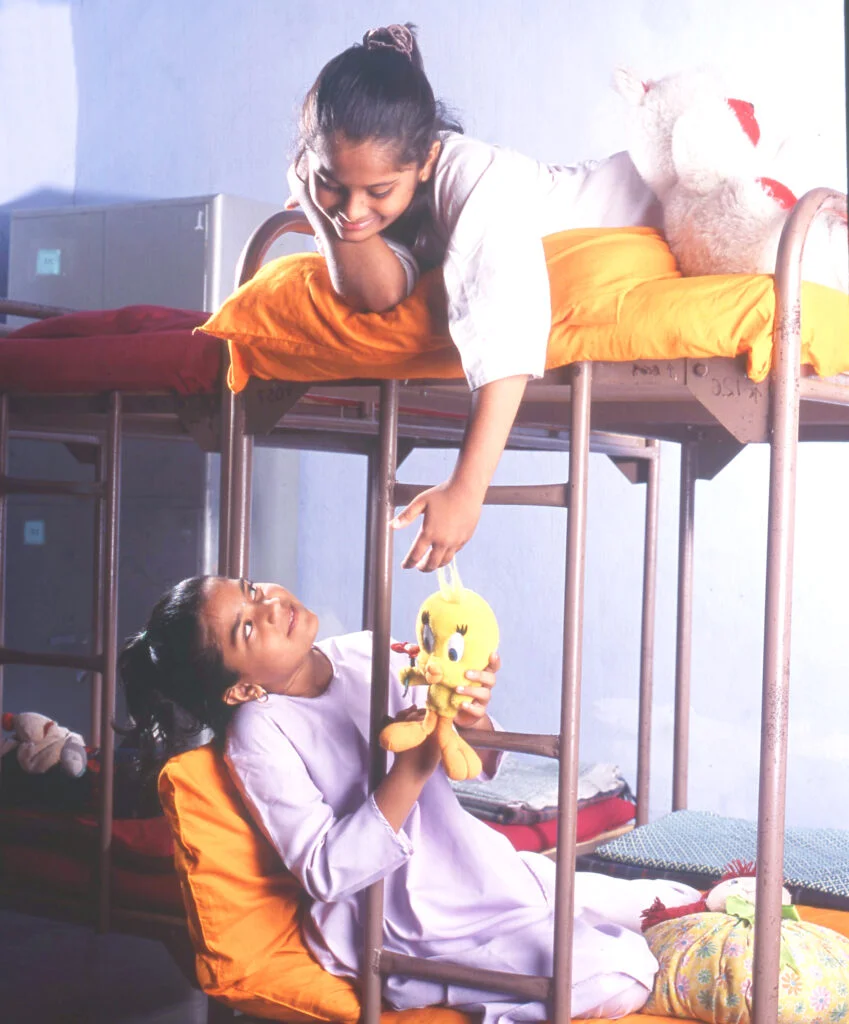
The Abhyasa environment facilitates community living by simulating the larger society with students from all over India and abroad. The school is a replica of the larger world where individuals from different social and cultural backgrounds learn to live and work together until they reach a new level of consciousness.
Hostel Facilities
Abhyasa Provides comfortable hostel accommodation with spacious dormitories, individual cots and cupboards, round-the-clock hot water facility, assistance by ayahs (nannies), laundry, hair saloon, a tuck shop with toiletry, confectionery and stationary items, a tailor assistance.
Diet
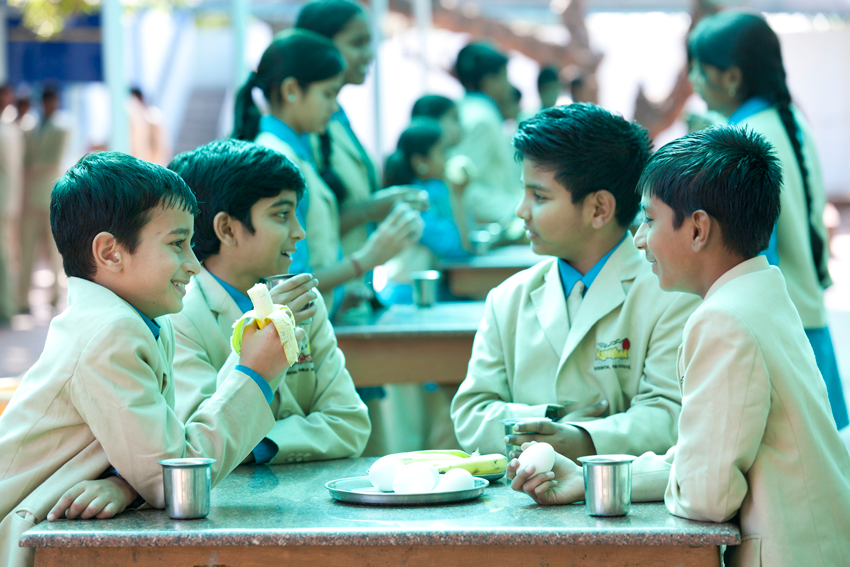
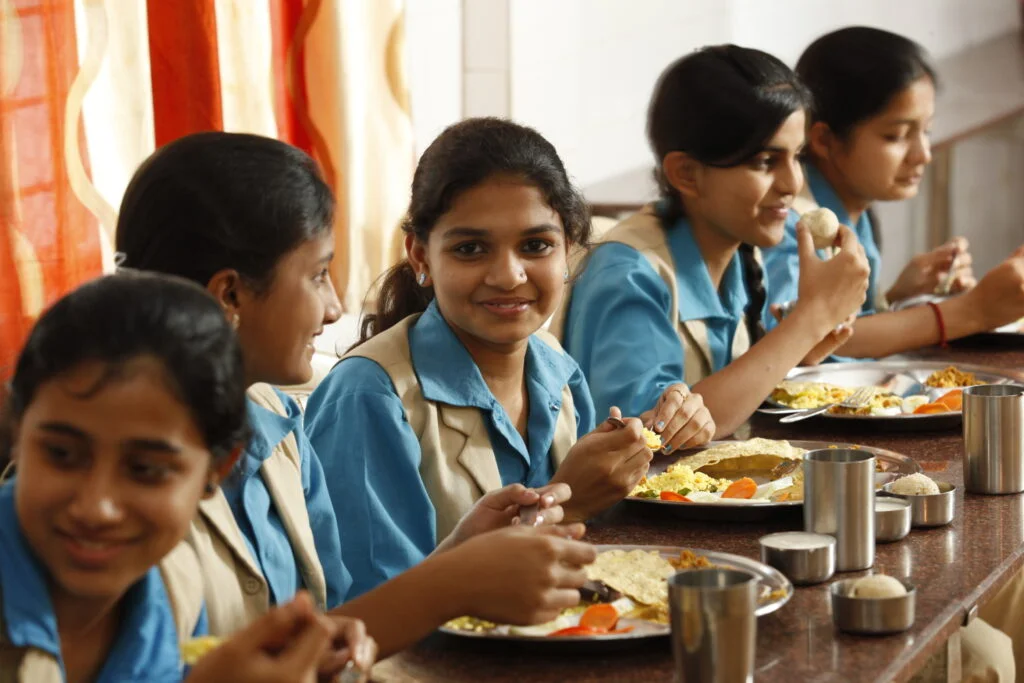
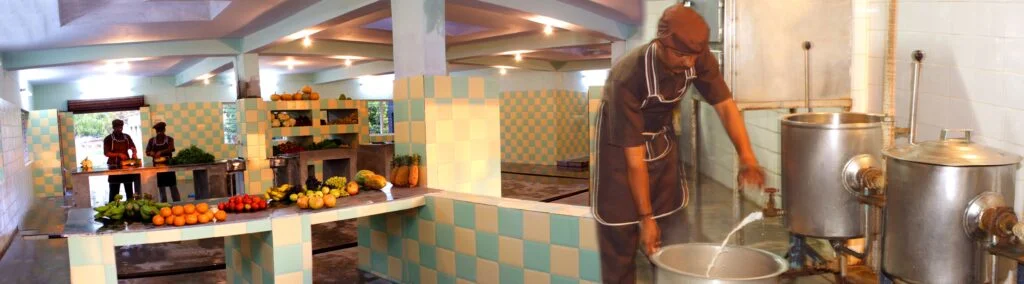
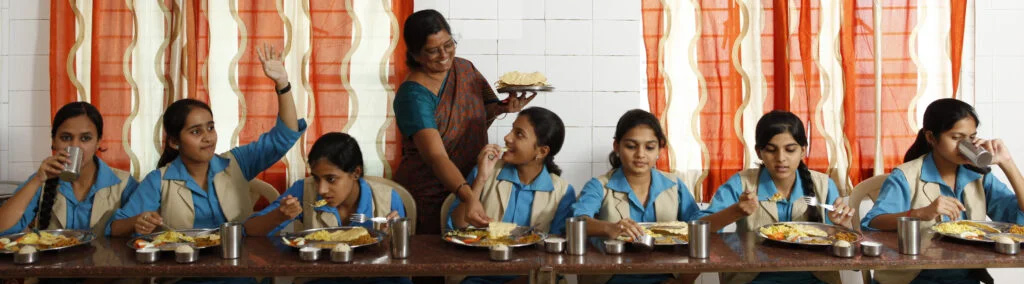
Abhyasa provides well-balanced and nutritious vegetarian food for the students under the guidance of a dietician. Daily diet consists of wheat & ragi porridge, Milk (two times a day), protein cereals, seed sprouts, fresh greens, vegetable salads & fruits apart from a variety of rice, chapathi, snack and sweet items which cater to various regional tastes. Egg and Banana are served every day during the 11am break. Teachers dine along with the students and personally look into each student’s diet habits. Teachers and students serve food by rotation so as to create a family environment on the school campus.
Students’ Mess Committee
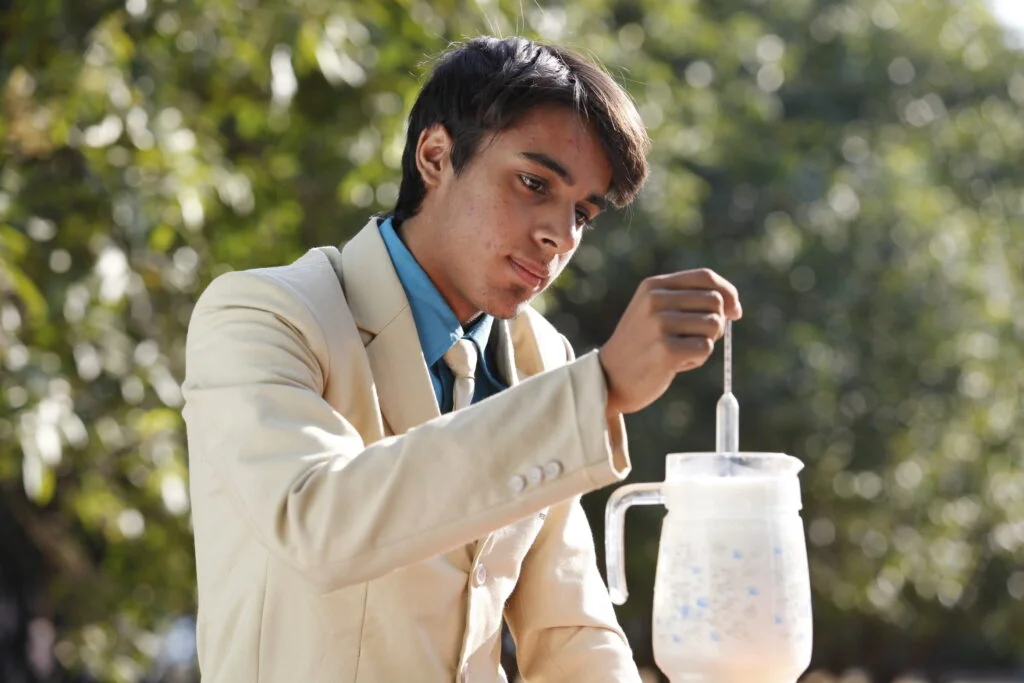
The Committee prepares the weekly menu and ensures that children get ‘what they like’. They also strictly monitor and control wastage of food. Teachers and older students serve food by rotation, dine together with the younger children and even feed the younger children whenever necessary-thereby creating the ambience of a single ‘close knit family’. Teachers & Masters who dine along with the students personally look into each student’s diet habits. Students of the Mess committee monitor the quality of milk, vegetables and groceries supplied to the school mess every day. Lacto-meters are used to detect adulteration of milk and all the food items are tasted by a panel of teachers and students before it is served to the rest of the school.
Menu
| Morning | Evening |
|---|---|
|
Breakfast (7 AM) Sprouts and Milk with any Two of the following items: |
Snacks (5 PM) Milk with any One of the following items: |
| Idly with Chutney & Sambar | Savouries such as Mixture, Muruku etc. |
| Vada or Mysore Bajji with Sambar | Boiled Chole or Ground Nuts |
| Bread with Jam & Chutney | Maggie Noodles or American Chopsuey |
| Fried or Boiled Egg | Bhelpuri with Chutney or Puffed Rice Mixture |
| Vermicelli Upma or Pulihora | Poha Upma |
| Chapathi with Curry | Palak or Onion Pakoda |
| Bansi Rawa or Bombay Rawa Upma | Bun with Chutney |
| Pav Bhaji or South Indian Rice Pongal | Sabudana Vada & Curd |
| Sabudana Khichdi or Green Gram Dal - Rice Khichdi | Masala Wada or Alu Bonda or Mirchi Bajji |
| Pesarattu or Uttappam or Dosa with Sambar & Chutney | Panipuri |
| Vegetable & Egg Noodles | Vegetable Burgers or Vegetable Puffs |
| Puri with Curry or Chole - Batura | Alu Samosa or Kachori |
| Macaroni Pasta or Corn Flakes with Milk | Pav Bhaji or Vegetable Cutlet |
| Lunch (1 PM - 2 PM) | Dinner (8 PM - 9 PM) |
| Vegetable Salad | Rasam or Soup |
| Fried Rice with Masala Curry | Vegetable Curry |
| Vegetable Curry | Freshly Ground Chutney |
| Dal or Sambar | Tur Dal |
| Plain Rice & Chapathi | Plain Rice & Chapathi |
| Curd or Butter Milk | Curd Rice |
| Papad or Fryums | Dessert / Fruits (Alternate Days) |
Infirmary
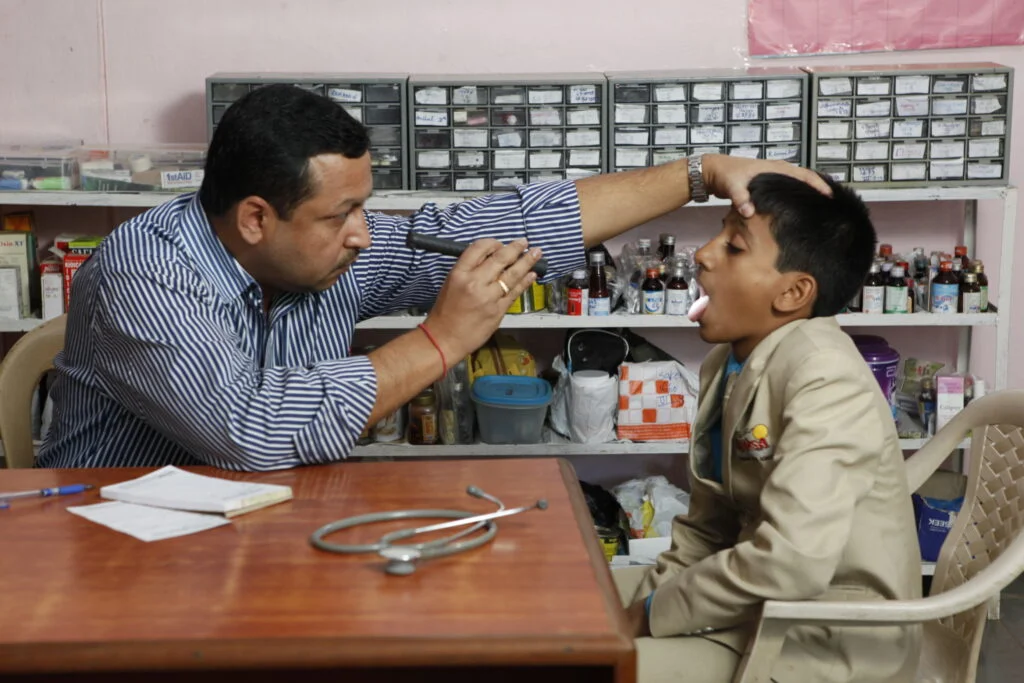
An in-house Sick Dorm is available for all students to ensure that their medical needs are attended on a 24/7 basis. A stationed, qualified and trained nurse is available to look after medical issues of students. An ambulance is always available at a call. The infirmary is ready with all the necessary basic equipment to attend any type of emergency.
Health Report
Record of the sickness of each student is maintained by the school and updated on a weekly basis. Detailed information about: illnesses, their diagnosis, medicines administered to the child during an illness are made available to the parents who can constantly monitor the ‘Health Status’ of their child. Parents also receive intimations through SMS in case of any serious illness and the school nursing assistant would be available for discussion on phone. There is a hospital with scanning and operation facilities, adjacent to the school campus and the doctor is available round the clock for any emergency. Toopran town also has a facility of 108 ambulance service. In case of a serious illness the child will be shifted to a competent hospital at Hyderabad and parents will be duly informed of the admission. Expenditure incurred on such hospitalization will be borne by parents/guardians.
Periodic Health checkup
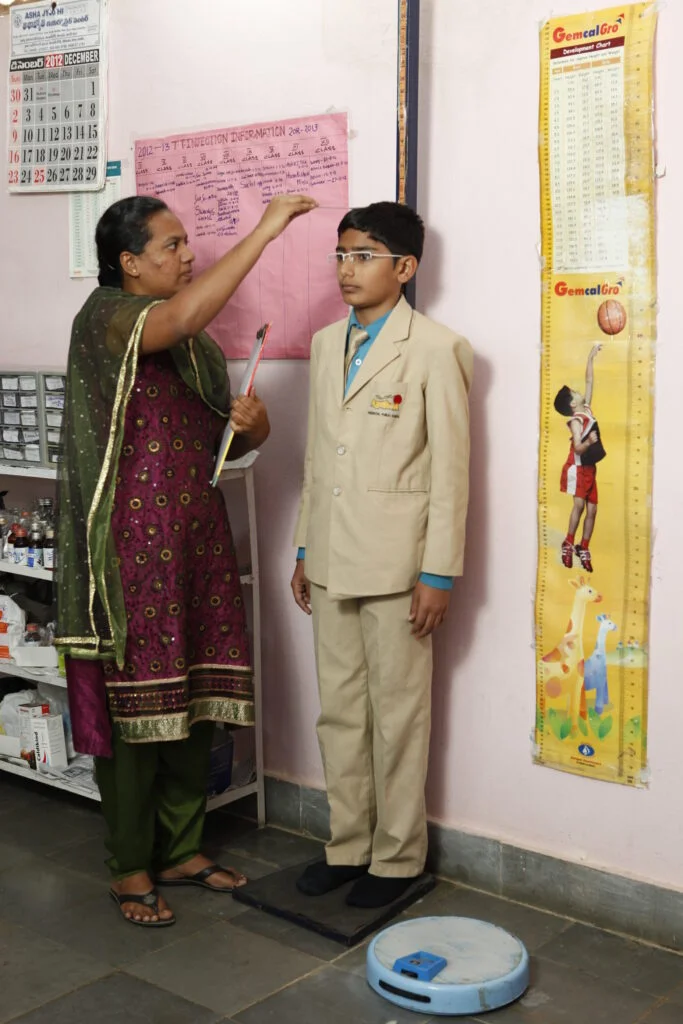
Monthly health check-ups are under taken for each and every student to make sure that the students grow taller, stronger and sharper. Height and weight check-ups are done regularly and the data is also available to parents. The data recorded is cross verified with the earlier readings to look for variations. If any weight loss is noticed in a child, a special care is taken by providing proper diet under the supervision of matrons. In case of seasonal contagious diseases, regular homeopathy medicines are administered as a precautionary measure for all inmates on campus. Periodic Orientation Camps for students are conducted by specialists such as Dentist, Orthopaedist, Psychiatrist, Gynaecologist etc.
Daily Hygiene Monitor
Every matron is provided with a check list to ensure that every student undertakes his/her daily chores such as brushing teeth, cutting nails, cleaning ears. All bed linen is changed weekly. Vaseline is provided to students to ensure that their skin does not dry up. All Dormitories have a safety insect net for all doors and windows and all the rooms are sanitized on a daily basis with the fumes from burning of dry Neem leaves. This also prevents the spreading of communicable diseases.
First Aid
Training in basic emergency medical aid is provided to all the students at the beginning of every academic year. Students learn how to use the first-aid kit. They also learn about the basic types of medicines and techniques that are necessary to provide emergency help in case of eventualities such as accidents, hurt, falls, burns, breathlessness etc.
Fire Safety
Every inmate of the campus is trained in Mock Fire Drills thrice a year to ensure that every student is trained to face an eventuality of a fire accident. Students learn the skills of using fire extinguishers placed in all vital locations namely classrooms, dorms, dining hall, laboratories etc.
Safety & Security
The safety and security of the children and school campus is outsourced to Professional Security Agencies. Constant vigil is maintained round the clock at all vital locations around the campus to ensure that children are safe and secure at all times. The school also maintains a list of visitors authorized by the parent to visit their child on the school campus. Unauthorized visitors are not allowed to meet any child. Every call to and from the child is verified before the child attends to it to ensure that students are communicating only with their parents and guardians. Attendance of all students is taken by every subject teacher before commencing a class and all dinning sessions are monitored to ensure that every student is present. Special security check is conducted before the students retire for the day to ensure that everyone is secure inside the Dormitories. A lady security guard is also available for girls.
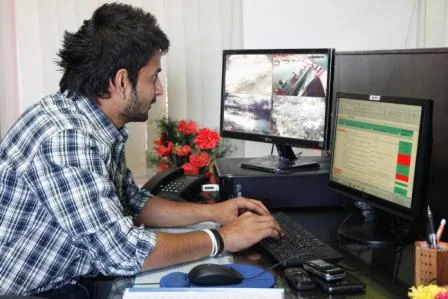
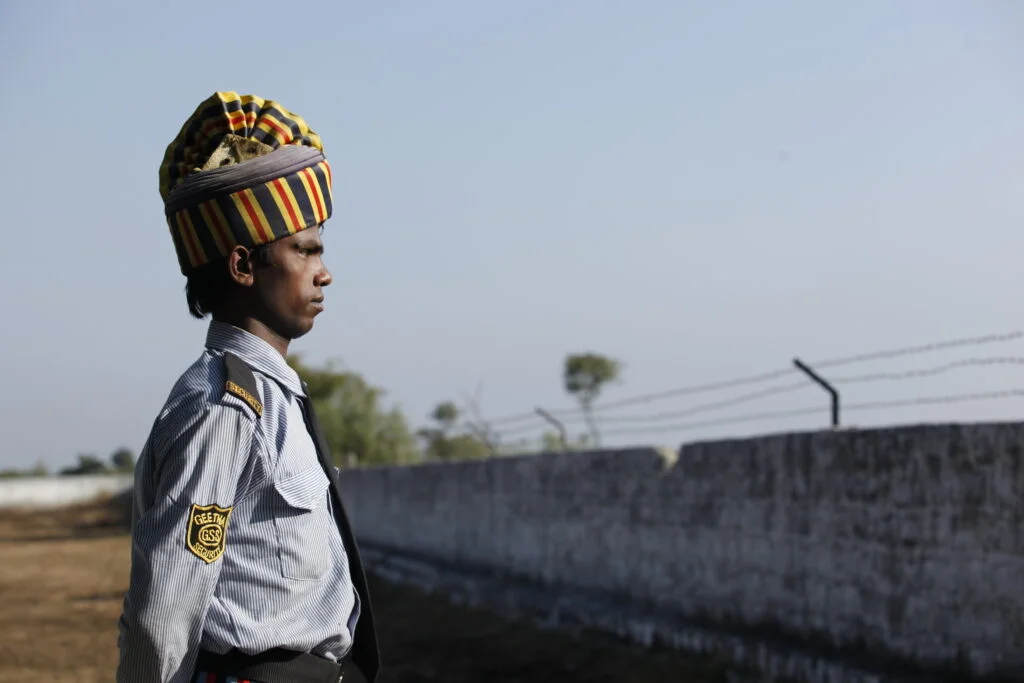
CCTV
The CCTV is a Live Centrally Monitored Surveillance system which watches the movement of Staff and Students at the critical locations of the large school campus, on a round-the-clock basis. This ensures a peaceful co-existence of inmates on the campus and also checks unwanted straying into prohibited areas. A Close watch is also kept on the movements of senior boys and girls and the system also prohibits the entry of unauthorized persons into the campus. The disciplinary issues or any other misbehavior could also be tracked. Abhyasa makes use of the latest technology to address the issues of Safety, so that the pupils on the campus could be safe and lead a hassle-free life-which is essential for the overall development of the Child.
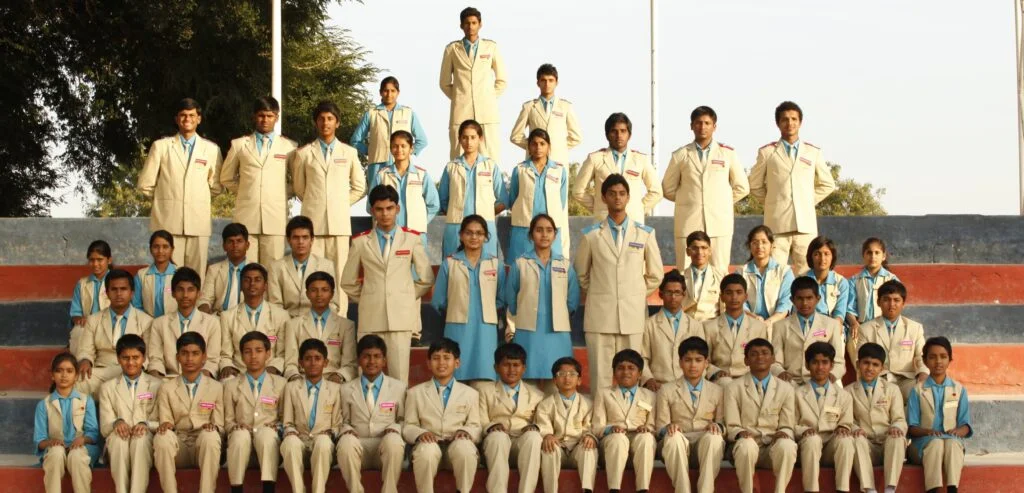
Prefectural Leadership
Abhyasa provides a unique opportunity wherein 10% of students in the school - selected from across all classes, get an opportunity every year to don leadership roles in the capacity of Managers, Class Leaders, Dormitory leaders, Academic coordinators, House Captains, Prefects, Head Boy, Head Girl and School Captain. It is an excellent opportunity for students to experience leadership and responsibility while at school.
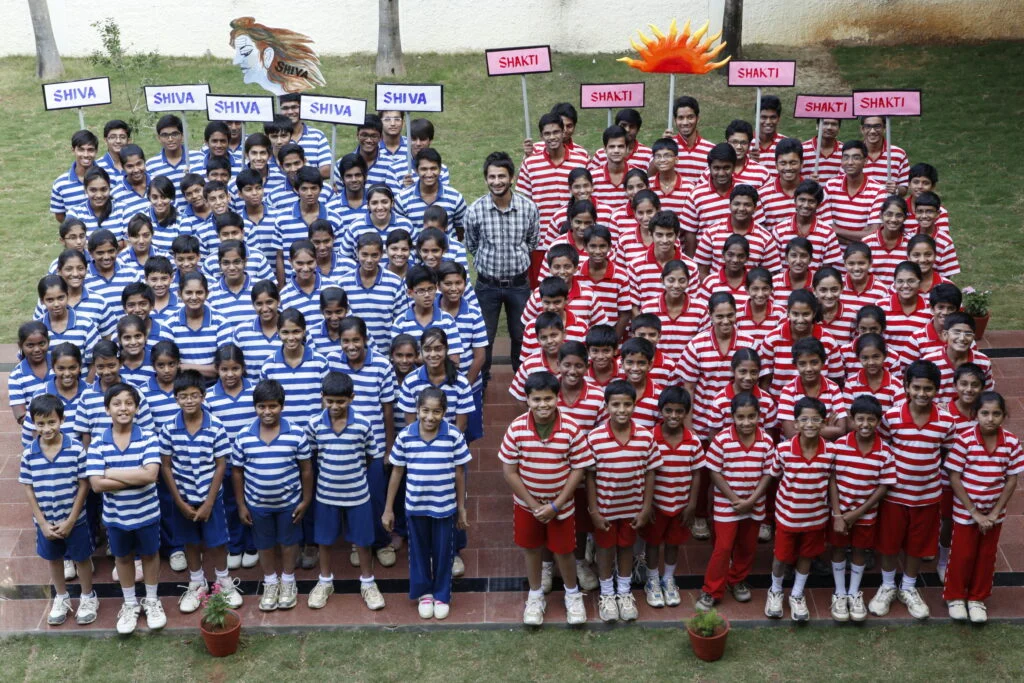
Shiva, Shakti & Saarva Houses
To develop a healthy competitive spirit among children, each student is assigned to a ‘House’ - to which he/she belongs and represents in all competitions on the school campus. The school is divided into three houses namely Shiva (Blue Color), Shakti (Red Color) & Saarva (Yellow Color)- symbolizing the Masculine and the Feminine aspects of Nature. The house captains mobilize boys and girls at the junior (Grades IV, V & VI) - Intermediate (Grades VII & VIII) - Senior levels (Grades IX & XI) to participate and compete in various Inter-House Games and Cultural activities.
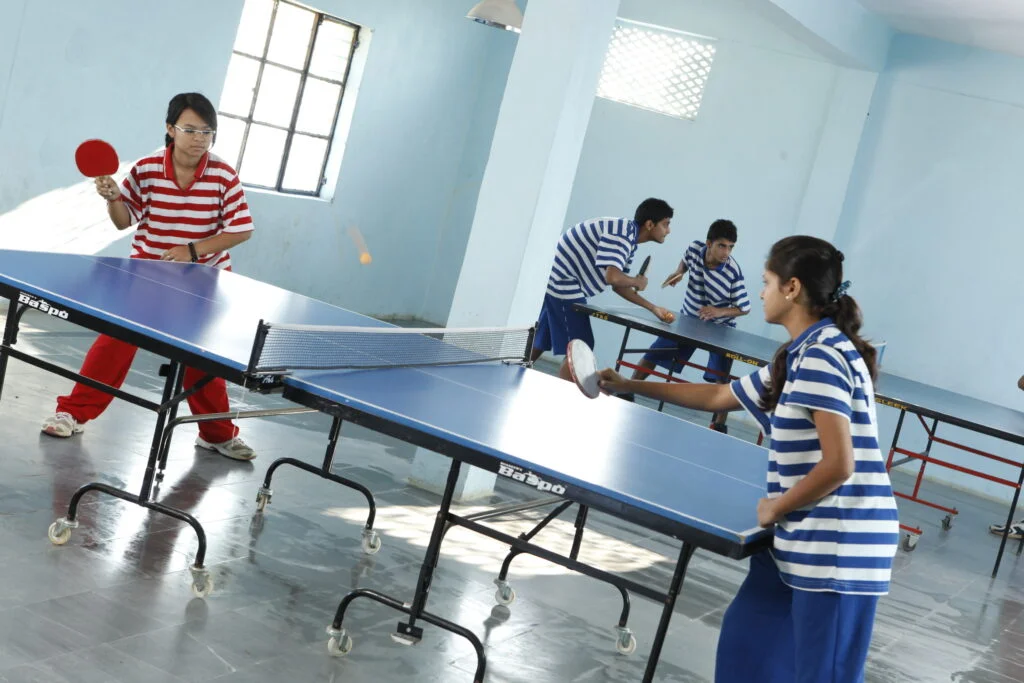
Inter House Games and Sports
Competitions are conducted in all Games and Sports events throughout the year - to spot talent and train students for external Inter-School competitions. An annual time table is drawn up for exhibition matches at every weekend and the sports, field and track event competition are held during the months of September - October, culminating in a Inter-House Sports Festival on the last day of the First semester. These programmes are planned in consultation with the student leaders and State and National level event records are monitored to meet targets.
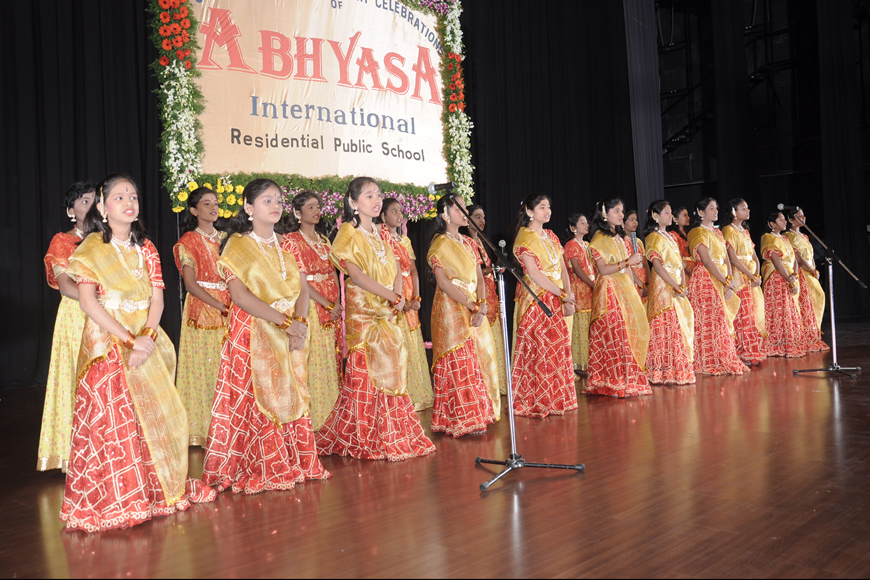
Student Club Activities
These activities are Inter-house Competitions conducted by the School in various events such as Dance, Music, Fashion Show, Quiz, Debate, Elocution, Science Projects, Poetry, Dramatics, Antakshri, Fun Games like ‘what’s the good word?’, Dumb charades etc between the Shiva and Shakti Houses at the three levels of Juniors, Intermediates and Seniors. All preparations for performances are undertaken completely by the students without any inputs from their teachers. This brings out their innate talents and creativity and also helps to shed inhibitions in the child. This training imbues organizational and managerial skills in children and inculcates collective responsibility. Such competitions are held every Sunday and the points scored by each house are added to the overall tally of the House Points.
Student Management Committees
At Abhyasa, the students manage various departments of the school through Committees headed by a Student Manager, Deputy Manager and Voluntary Members drawn from classes VIII to XII. Students set annual goals for each of their respective departments at the beginning of the academic year and lay down a set of rules and regulations to manage the departments. The various Management Committees include:
- Academic Management (Monitors Teaching - Learning process)
- Campus Management (Monitors Campus Environment and Hygiene)
- Discipline Management (Monitors Student Behavior and conflicts)
- Extra Curricular Activities and Event Management (Entertainment)
- Games and Sports Management (Plans Competitive Strategies)
- Rural Service Management (Interacts with the lesser privileged)
- Spirituality Management (Organizes Spiritual enhancement events)
- Mess Management (Monitors menu, quality and waste prevention)
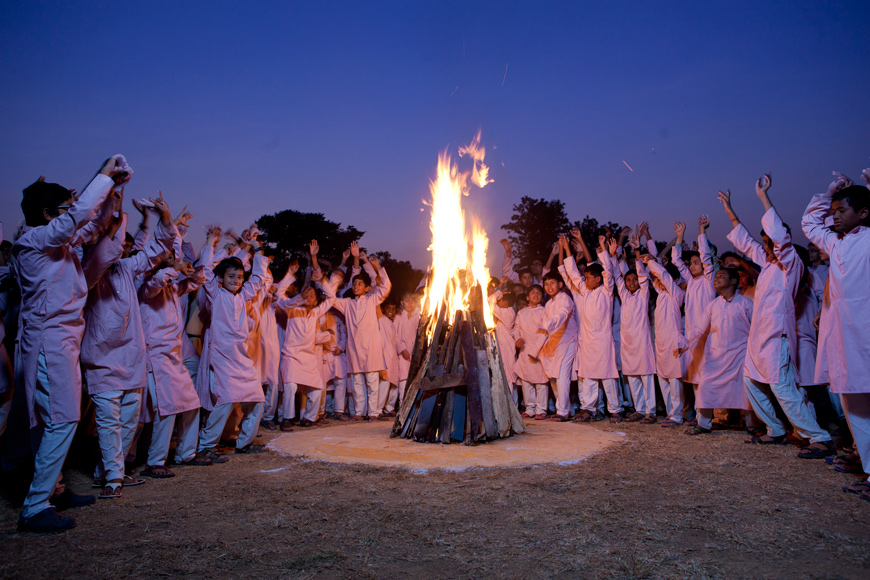
Ambassadors of the Environment
Abhyasa National Green Corps Eco-club has Green Soldiers from class VII onwards. The club has taken up water conservation awareness through skits, puppet shows, debates, quiz etc. and recycling of water and newspapers. The Andhra Pradesh NGC team identified and recognized Abhyasa’s Eco-club activities and aired our success story on All India Radio - New Delhi. Our little soldiers are making Abhyasa campus a ‘Zero-Waste Campus’ and a ‘No-Plastic Zone’ by segregating and recycling waste. Students are safeguarding a 100 year old Banyan Tree on the campus and planning to revive a dying river on the outskirts of Toopran.
The following activities are highlights of the club:
- Bio-Diversity
- Water Management
- Waste Management
- Energy Management
- Land-use Management
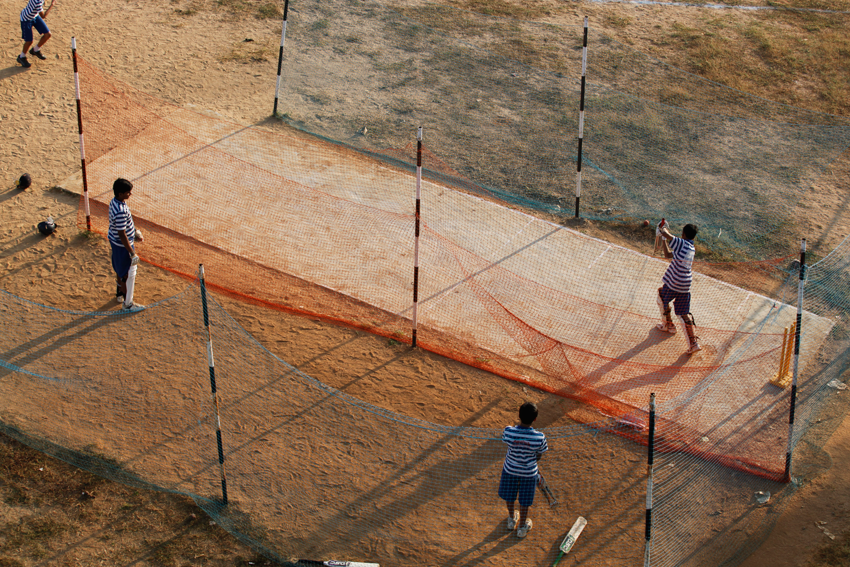
Sports & Recreation
"All work and No play-makes Jack a dull boy" - so goes the adage. Recreation is one of the Seven Essential Needs for Human Survival, which many corporate schools and colleges ignore these days. When an institution does not care to organize entertainment activities for its students, they in turn discover un-wanted and un-healthy means of keeping themselves in good humor. Even in Several homes in the metros today, children are addicted to passive entertainment from Television and Internet, making them nothing more than couch potatoes.
Active Entertainment
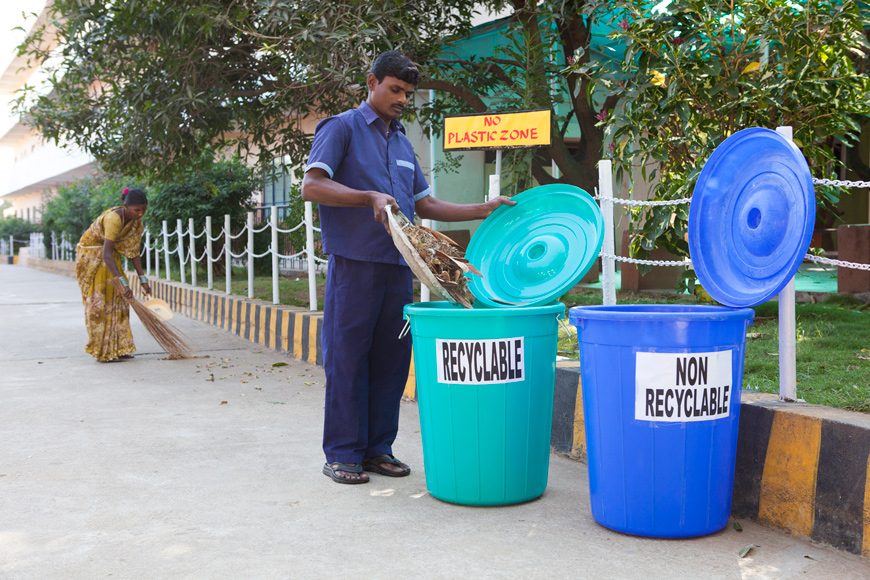
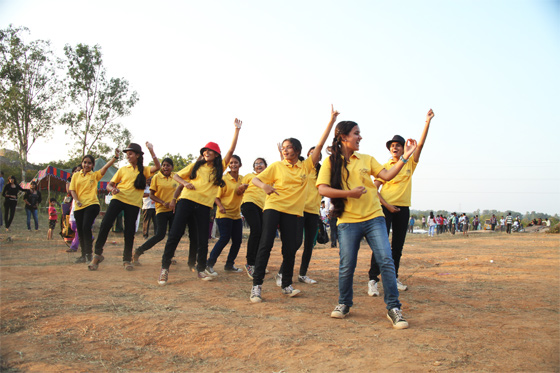
Abhyasa believes that only when a child actively participates in the entertainment, he/she is happy, healthy, confidant and creative too! The school organizes Sunday picnics and Trekking Camps, apart from Saturday evening Campfire dances and Candle light dinners during the weekends. Students and staff alike set aside their inhibitions of age and status and spontaneously join in the bonhomie, for we at Abhyasa believe that freedom of expression is a part of Personality Development. Only individuals, who have attained inner freedom to express themselves openly, develop the capability of transforming their Society!
Live Radio on Campus
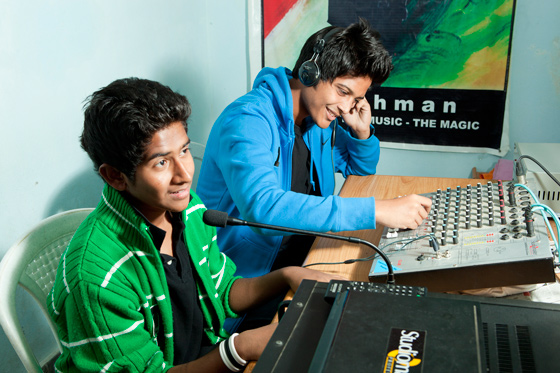
Each day on the campus starts with soothing melodies aired on the Live Campus Radio - ‘Abhyasa Vani’ It begins as early as 5.45 in the morning with ‘Bhakti Sagar’ programme (devotional songs), followed by popular film music during the breaks and dining sessions every day. Interviews are conducted by the student R.Js (Radio Jockeys) of students / staff on their birthdays and of any guests visiting the campus. The system is also used for important announcements for all the staff and students.
Sunday Specialization Classes
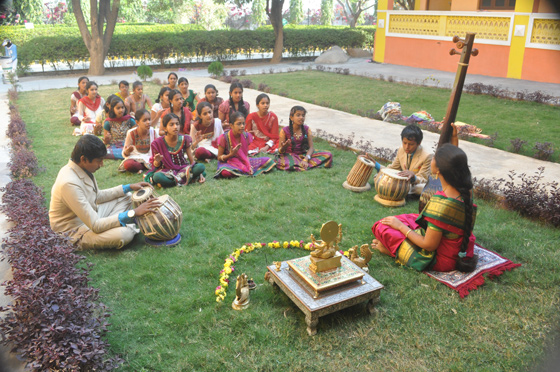
Abhyasa recognizes the innate potential of the students from classes IV to IX and has set aside a good three and half hours every Sunday for getting them trained in the vocations identified by the school to develop student skills and aptitudes. Activities, namely Basket Ball, Cricket, Swimming, Athletics, Badminton, Art, Dance, Literature, Music - Vocal & Instrumental, Martial Arts, School Band, Gymnastics, and photography are offered at Abhyasa. Students of classes X and XII spend time in enhancing their skills for facing All-India level Competitive Examinations for entry into various professional courses. The school also facilitates bringing in specialists in various skills/academic subjects to coach the students on Sundays.
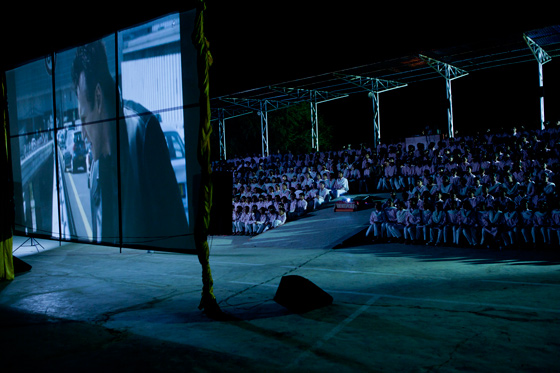
Sunday Evening Cinema
Award-winning Hollywood and Bollywood films are screened for all the students in the school Amphitheater. The screening is usually followed by a value-discussion on the film content with the School Director, over a cup of hot coffee. The sessions are therefore not only entertaining, but also enriching.
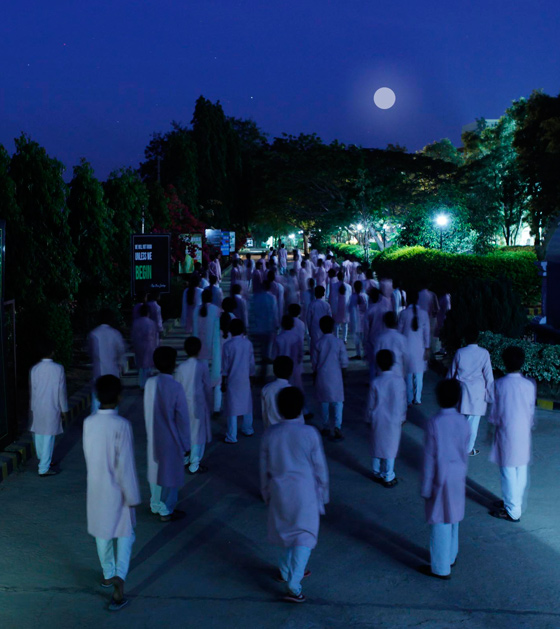
Moon Light Walks
The cool breeze, the starry sky and a full moon is a perfect setting for long late evening walks after dinner. Small groups of accompanied by their teachers stroll out of the campus into the meadows and the wilderness around. The peace, tranquility and the nostalgia of the moments form an inexplicable experience at Abhyasa.
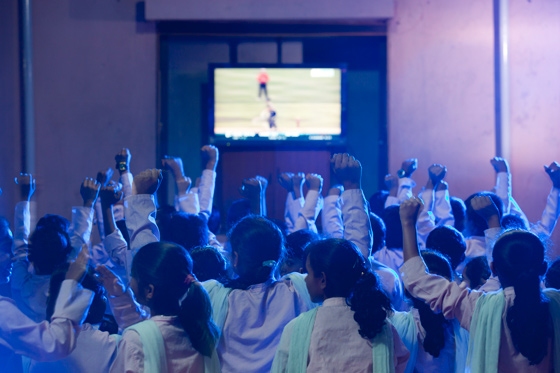
TV Time
One precious hour at the end of the day for any child is the TV viewing hour, wherein the students can update themselves with happenings around the world by watching the news, or enjoy the fun of a cartoon network show. Cricket matches and other sports events are the most popular among students.
Self Reliance
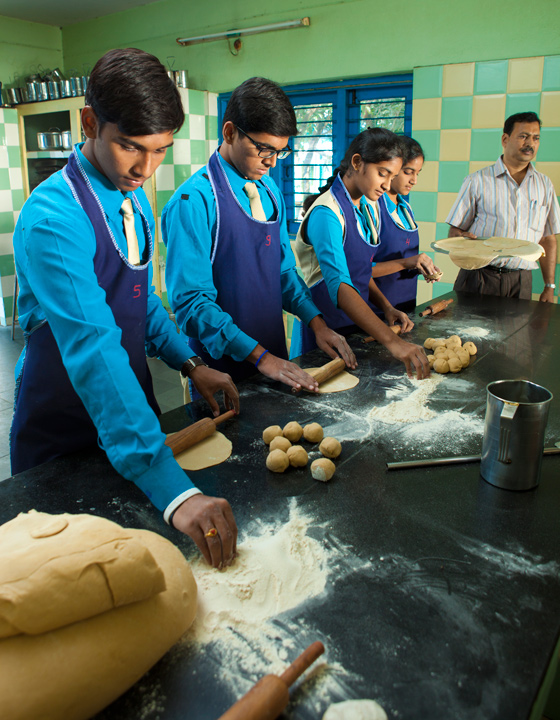
Self-reliance activities are aimed at promoting ‘Dignity of Labor’ among children. Students are trained to maintain cleanliness of Dormitories, Classrooms and the Campus. They maintain vegetable gardens and help in the kitchen by rolling out chapattis/puris, peeling/sutting vegetables and also setup audio-visual systems for school events. They gain insights into different Work Areas of Life, Self-Help and Survival Skills.
Monthly Parent Visit (Sunday Afternoon)
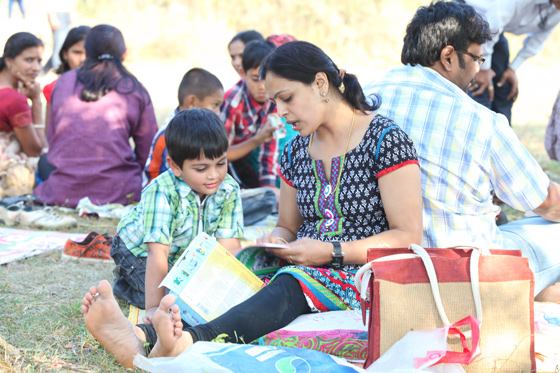
On Sundays earmarked in the school almanac, the parents of students are invited to visit their child on the campus. Such visits are generally held between 1.00 PM & 5.00 PM and parents are permitted to bring Home Lunch for their child/ward on the campus on the condition that No plastic or garbage is left behind on the Campus. The parents could also interact with the members of the School Administrative Team on any issues pertaining to the child. During these visits parents are also permitted to scrutinize the student’s academic work and other projects undertaken by their child/ward.
Tours and Adventure Camps
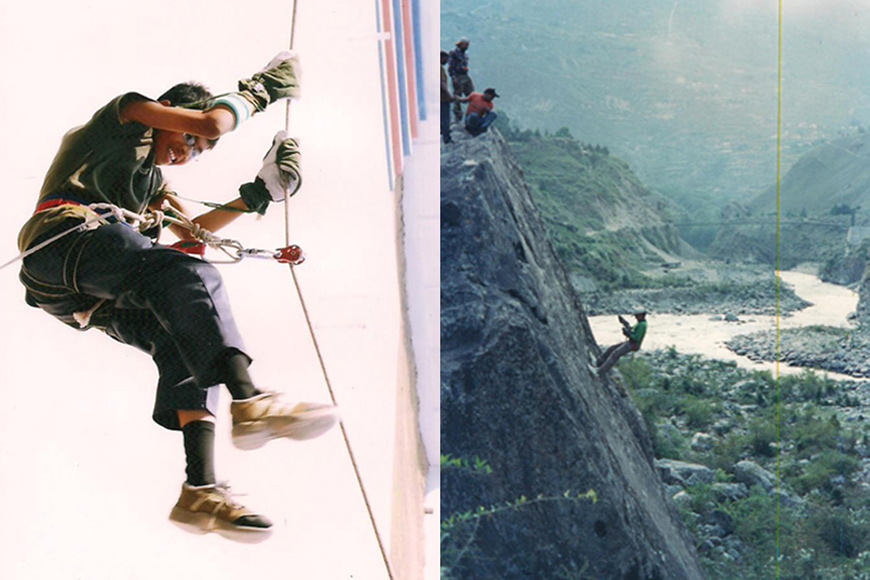
At Abhyasa, every tour and adventure camp is a journey toward Confidence, Character and Creativity. From nature walks and Himalayan treks to hands-on field trips, student picnics and global leadership experiences in the USA, our learners grow beyond classroom walls. These experiences build confidence through challenge, shape character through teamwork and responsibility, and spark creativity through exploration and discovery. By learning in nature, engaging with communities, and participating on international platforms, Abhyasa students emerge as resilient, compassionate and globally aware young leaders — prepared not just for academic success, but for life.
Rural Service Programme
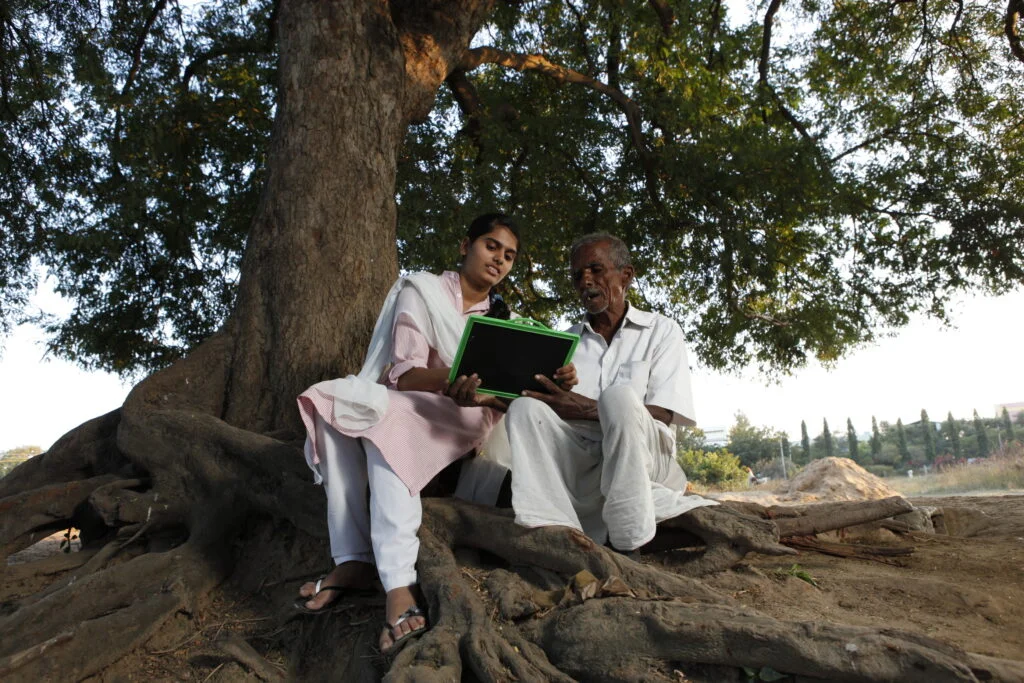
Aims to sensitize the students to the economic and social realities of Indians and share their resources with the less privileged and disadvantaged. Inculcates social responsibility, empathy and service mindedness among the students.
Arpan
The rural service programme of Abhyasa aims to sensitize the students to the economic and social realities of Indians and share their resources with the less privileged and disadvantaged, inculcates social responsibility, empathy and service-mindedness among the students. The students have adopted the 300-household Harijanwada at Toopran village and aim to develop this hamlet into a model village, by the year 2020. Regular health checkup camps, sharing of educational technologies, de-addiction counseling programmes are conducted by the students at the village.
Bi-Annual Medical Camps for the Poor:
The camps are conducted in the months of July and in Nov with an idea to serve the Medical needs of the people in and around Toopran. On an average in every camp at about 800 patients are diagnosed and medicines are distributed freely. Many Doctor Parents also contribute to the success of these Medical camps.
Adult Literacy:
The Abhyasa Gram Seva Student Management Group spend their free time and the Sundays with the people of Harijanwada in Toopran motivating the School drop outs to go back to Schools and educating the illiterate.
Computer Literacy for Un-Employed Youth:
The un-employed youth in the village of Toopran get an opportunity to develop Computing skills through this programme, where Abhyasa students along with an external faculty teach Computer basics and programming.
De-addiction and Family Counselling:
The Students of Gram Seva Management go house to house in Harijanwada, talking to people about the ill-effects of different addictions such as smoking, chewing tobacco etc. Some movies were also shown on Health and Hygiene. AIDS Awareness programmes are also being organized by students.
National Rural Employment Guarantee Scheme:
Under this scheme Abhyasa is planning to acquire some govt. land to take up Commercial Plantation to provide livelihood to a few families in the village of Toopran.
Narayana Seva:
Under Narayan Seva, we at Abhyasa distribute food to the needy in the village. This is performed on all the festive occasions where the Students go to the village and distribute food to all at Harijanwada.
Festivals & Celebrations
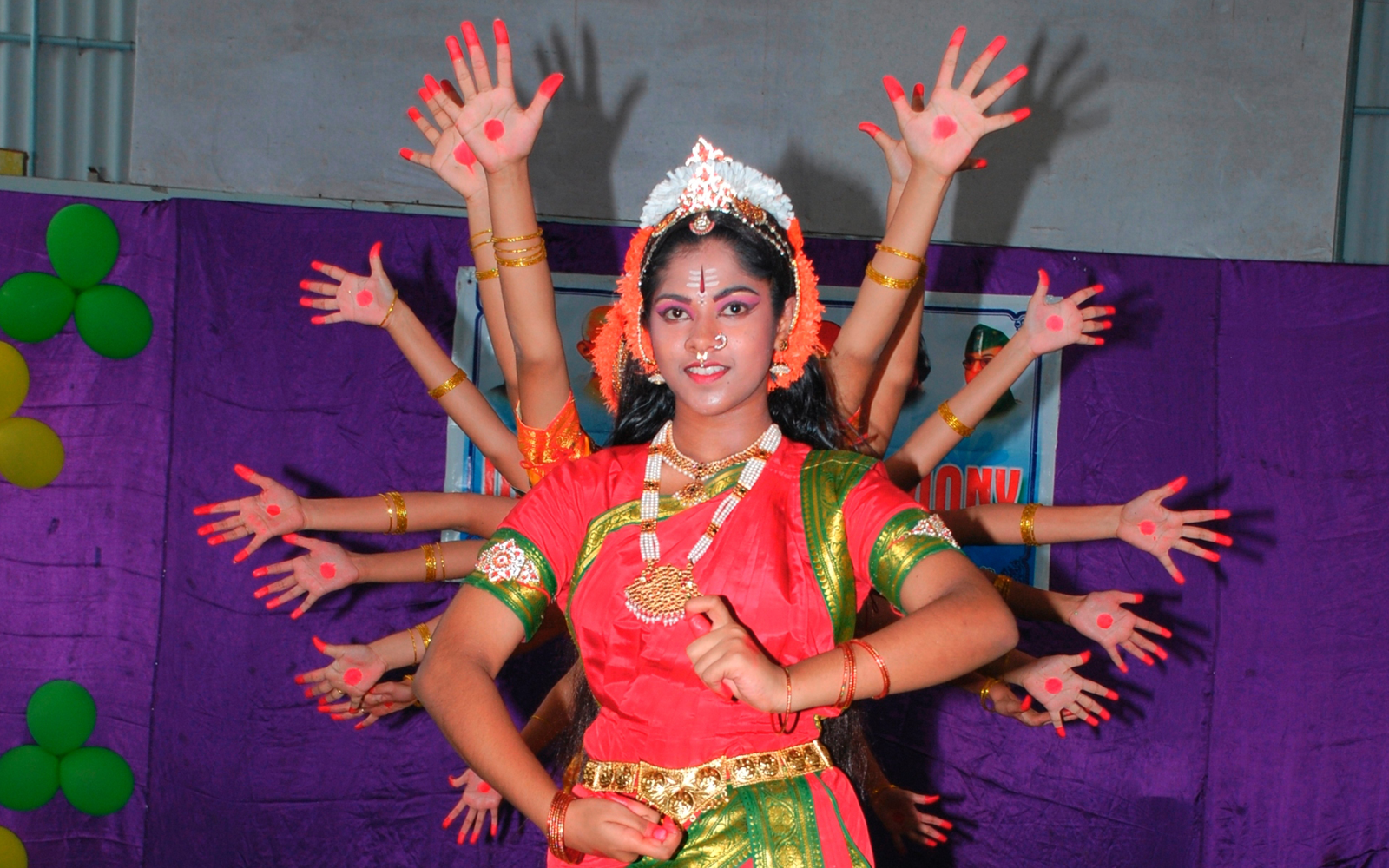
Culture is a strong binding force in societies and every individual is rooted in a culture that influences his/her life style and attitude towards life. In Abhyasa, we train students’ right from childhood to experience various cultures through the celebration of all religious festivals and develop tolerance, understanding, and respect for communities-that paves way for a harmonious social living. Abhyasa blends the traditions of Indian Gurukuls and the system of Public Schools to provide an open-minded outlook towards life that encompasses everything that is natural, good and promotes positive values. At Abhyasa, we believe in the ‘Brotherhood of Mankind’ and the ‘Fatherhood of God’ as an Omni-present and Omni-potent force. Major festivals of all religions are celebrated with religious fervor to promote tolerance and love for all races and creeds. The presence of students from all over India and abroad provides a cosmopolitan setup that broadens the horizons of interaction among children.
Festivals & Celebrations
Culture is a strong binding force in societies and every individual is rooted in a culture that influences his/her life style and attitude towards life. In Abhyasa, we train students’ right from childhood to experience various cultures through the celebration of all religious festivals and develop tolerance, understanding, and respect for communities-that paves way for a harmonious social living. Abhyasa blends the traditions of Indian Gurukuls and the system of Public Schools to provide an open-minded outlook towards life that encompasses everything that is natural, good and promotes positive values. At Abhyasa, we believe in the ‘Brotherhood of Mankind’ and the ‘Fatherhood of God’ as an Omni-present and Omni-potent force. Major festivals of all religions are celebrated with religious fervor to promote tolerance and love for all races and creeds. The presence of students from all over India and abroad provides a cosmopolitan setup that broadens the horizons of interaction among children.

The first festival is indeed the day most looked forward to, as it is Abhyasa’s Birthday, on June21st. It was on this day that the school came into existence in the year 1996. A very significant day indeed, not just because it is Abhyasa’s Birthday, but also because it happens to be the longest day (summer Solstice). Cake – cutting and a Fresher’s Party for the new arrivals are highlights of the day.

Guru Poornima
The Poornima (Full Moon) Day in the month of Ashadha (July-August) is known as Guru Poornima, as it is the birthday of Sage Veda Vyasa- the author of Mahabharath and the ancient Hindu Puranas. On this day, special worship is performed of the Acharyas (Gurus), who, through their Infinite Compassion and Supreme Grace, have imparted knowledge to all the Seekers of the Self. At Abhyasa, the day starts with community singing (Nagar Sankeertan) in Toopran village followed by distribution of food. Obeisance is paid to the spiritual Guru.
Raksha Bandhan
Raksha Bandhan celebration is the festival to express the immaculate love between brothers and sisters. Rakhi epitomizes the unconditional love between brothers and sisters. All the girls of Abhyasa organize a cultural programme for their brothers on the campus, which includes tying of ‘Rakhees’, Singing of Songs, Dance performances, speeches and offering of Harathi and sweets. It’s a day that reminds everybody of the bonhomie that we share on the campus.


Janmashtami
Janmashtami is the birthday of Lord Krishna an avatar of the Hindu deity Vishnu. The festival falls in mid-August-September as per the Gregorian Calendar. The programme consists of dances, songs, speeches, ‘bhajans’ sung in praise of Shree Krishna, as he swings blissfully on a beautifully decorated cradle and relishes the sweets and savories offered. ‘Breaking the butter pot’ is a significant event in Krishna’s life that is enacted as a popular sport in many parts of India. A student – representing Krishna – tries to reach the butter pot by climbing a human pyramid.
Independence Day
Students organize a flag hosting ceremony. The air is filled with patriotic feelings that emanate from various songs aired on the campus radio. As the tricolor goes up atop the administrative building of Abhyasa, all the students salute with reverence and pride and sing the national anthem. The programme consists of patriotic songs sung by students and speeches eulogizing the great sacrifices made by our freedom fighters followed by the Principal’s message.


Ganesh Chaturthi
The festival is observed during August – September which lasts for 10 days. Ganesha, the elephant-headed son of Shiva and Pravati, is widely worshiped as the supreme god of wisdom, fortune and remover of obstacles. All the children devotedly make eco-friendly idols of ‘Lord Ganesha’ with locally available natural clay. Each class competes with the other in a creative way. On the 10th day of immersion, the students carry all the idols in decorated palanquins and proceed in a procession comprising the Vedic chanting group, bhajans singing group, the dancing group and the shouting brigade who fills the air with "Ganapathi Bappa Moriya”. After reaching the lake on the outskirts of Toopran, the idols are immersed into the water.
Teachers’ Day
On 5th of September, the birthday of ‘Mr. Sarvepalli Radhakrishnan’ – one of the most learned Presidents of India, who was also a teacher – Teachers day is celebrated with respect and gratitude towards the teaching faculty. Keeping in tune with the Indian Gurukul traditions, Abhyasa students perform ‘Paada Puja’ (worshipping of the Guru’s feet) for all their teachers. It is followed by felicitation of all the staff members by the Principal. Later in the evening, the students entertain the staff with songs, dances, fun games and ramp shows.


Founder’s Day
The day which every Abhyasite look forward to with joy, pride and awe is "The Founder’s Day”, the birthday of our beloved Director and Founder Principal Mr. Vinaayaka Kalleetla on 6th September each year. The day is full of surprises for both the ‘birthday boy’ and the students! The day is filled with exciting and entertaining performances by the students and the staff.
Eid-UI-Fitr
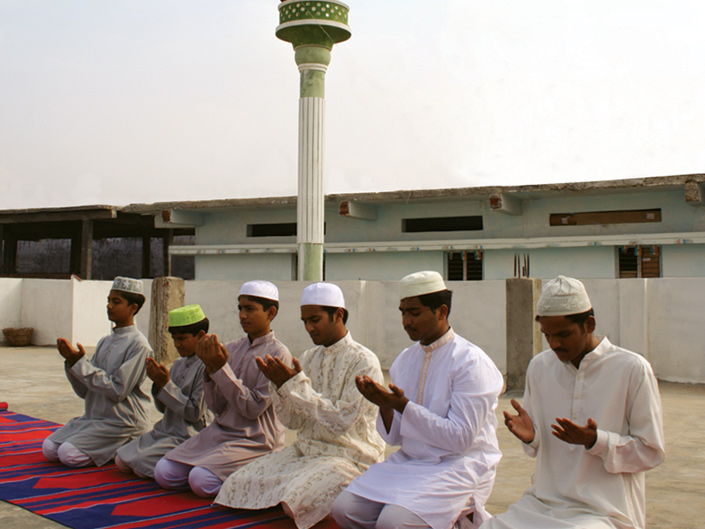
Eid-UI-Fitr, popularly known as the "Festival of the Breaking of the Fast”, occurs as soon as the new moon is sighted at the end of the month of fasting, namely Ramadan – the ninth month of the Islamic calendar. This festival prepares the devout for self-examination – taking him/her closer to God. Abhyasa students visit the Mosque and offer prayers to the Almighty ‘Allah’. An interaction with the local ‘Moulvi’ enlightens the students about Prophet Muhammed (pbup) and his teachings in the holy Book of Quran. The day culminates with a traditional ‘Iftar’ party on the campus.


Onam
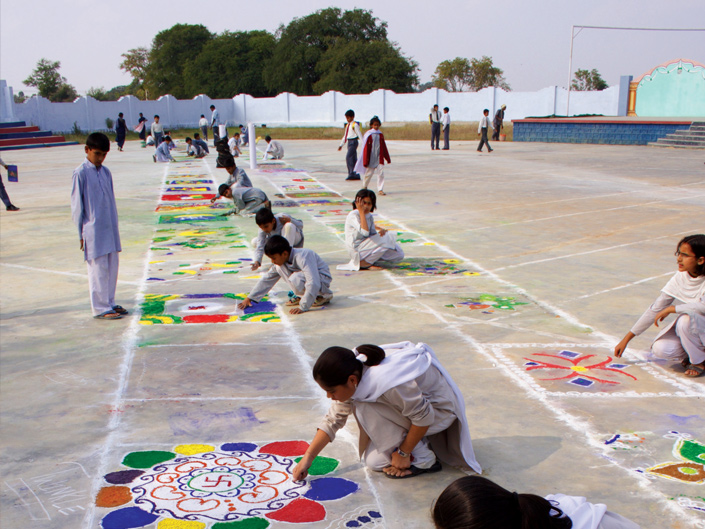
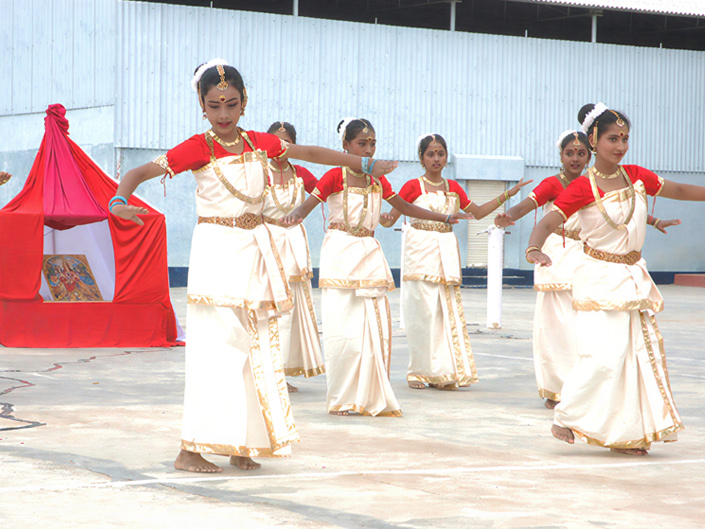
This festival falls in the month of August/September and celebrated pre-dominantly in the state of Kerala. As the festival occurs in the midst of Monsoon season, it celebrates the green beauty of the earth. Floral designs are arranged around decorated lamps and girls wearing the traditional attire of Kerala dance round the Alpana designs to the tune of Onam Songs. The Students are treated to special cuisine from the state of Kerala.
Dussera
Dussera – "The festival of Victory,” is celebrated for 10 days in all parts of the subcontinent. The festival is celebrated on the tenth day of the Ashwini month, according to the Shaka Hindu Calendar (around October) and symbolizes the victory of Good over evil. During the Navratri festival (nine auspicious nights)prayers are offered to the Mother Goddess (Shakti). Students are dressed in traditional attire and dance to rhythmic tunes for the traditional ‘Dandia’ dance.


Diwali
Diwali, also known as the Festival of Lights, is one of the most important and joyful festivals celebrated across India. It symbolizes the victory of light over darkness, good over evil, and knowledge over ignorance. The festival is marked by lighting oil lamps and decorative lights, bursting firecrackers, exchanging sweets, and performing prayers to Goddess Lakshmi for prosperity and happiness. Homes are cleaned and decorated with rangoli, flowers, and diyas, creating a warm and festive atmosphere. Diwali also brings families and friends together, spreading joy, positivity, and a spirit of togetherness in every home.
Children’s Day
14th of November is the birthday of Pandit Jawaharlal Nehru – celebrated as the Children’s Day all over India. This is the day of surprises and fun for all the Abhyasa children, as they get a chance to make even the most strictest of their teachers, dance to their tunes. Children taste the delicious-cuisine prepared personally by all the teachers and enjoy the fun –filled evening when their teachers behave like children – performing all sorts of gimmicks on the stage.


Birthday of Sri Sathya Sai Baba
The 23rd of November marks the birthday of ‘Bhagawan Sree Sathya Sai Baba’ – who epitomized service to mankind as equivalent to service to God. Abhyasa students fill the day with service and spiritual activities such as the singing of Bhajans, organizing a free medical camp for the needy in Toopran, free distribution of food and clothes, etc. The day ends with reiteration of his message….. "Love All, Serve All, Help Ever, Hurt Never”…
Christmas Celebrations
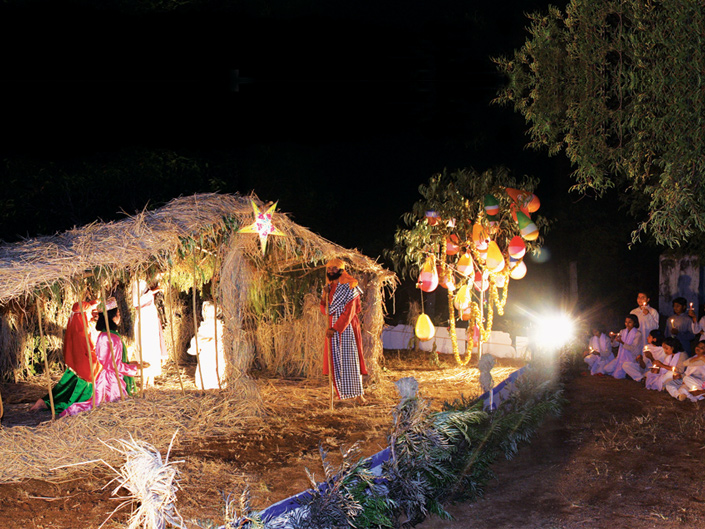
Christmas is celebrated on December 25th to commemorate the birth of Jesus of Nazareth. Abhyasa starts the observance of the Christmas Eve by celebrating the birth of ‘Jesus Christ’. They move in a candle procession and offer prayers at the Crib. Students look forward to Santa Claus early in the morning to receive goodies from him. Students visit the Church and attend the Special Service Sermon by the Father and sing carols and offer prayers.


Sankranthi
Sankranthi is a harvest festival celebrated in various parts of the country on 14th of January every year to mark the annual journey of the Sun into the constellation of Capricorn. The youth fly Kites, while the women folk decorate their thresholds with colorful designs. The farmers decorate their cattle colorfully and parade them in the streets. It is essentially a rural festival and Abhyasites experience it in all its vagaries in the rural setup of Toopran.
Republic Day
The Republic Day of India is a National festival to mark the adoption of the Constitution of India and transition of India from a British Dominion to an Independent Republic on January 26th 1950. As 26th January approaches, the spirit of patriotism and competition is high among the students of Abhyasa. The ‘Republic Day Run’ is flagged off from the Toopran Police Station and Students run through the streets of Toopran carrying the Indian Flag to return to the school campus. The boy and the girl who reach the campus first, get the privilege of hosting the tri-colour on this occasion.


Maha Shiv Rathri
It is a day of fasting and staying awake – to gain control over the bodily senses and desires. It is the day of fasting for the devout staff and students who visit the ancient Shiva shrine in Toopran and keep awake by chanting bhajans and offering rituals at the school temple late into midnight.
Republic Day
The Republic Day of India is a National festival to mark the adoption of the Constitution of India and transition of India from a British Dominion to an Independent Republic on January 26th 1950. As 26th January approaches, the spirit of patriotism and competition is high among the students of Abhyasa. The ‘Republic Day Run’ is flagged off from the Toopran Police Station and Students run through the streets of Toopran carrying the Indian Flag to return to the school campus. The boy and the girl who reach the campus first, get the privilege of hosting the tri-colour on this occasion.

Holi
Holi, the festival of colours is celebrated at the end of winter and the beginning of the spring season, on the last full moon day of the lunar month Phalguna (February/ March).
At Abhyasa, students enact the scene of Holika Dahan – marking the end of evil and also the end of an annual cycle of Nature. Students enjoy throwing coloured water on each other. The environment friendly Abhyasites prepare their own natural colours from beetroot, spinach, turmeric etc. and do not use any harmful chemical colors available in the market. Children play to their hearts’ content pouring coloured water on each other and dancing to the exciting ‘Holi’ tunes.
Graduation Ceremony of Class X and XII students
This is a solemn ceremony wherein the batches of Classes X & XII who have appeared for the board examinations – move in a procession solemnly attired with the special graduation gown from the administrative office to the venue of the programme. The student office bearers lay down their office and hand over the charge to the next leader. After the keynote address by the Guest of Honour, the Principal administers an oath to all the graduating students to uphold all the values and the traditions imparted at Abhyasa.
Later, the Chief Guest of the function gives away souvenirs and testimonials to all the students. Students and Parents share their experiences at Abhyasa and the programme endswith a special dinner hosted for all the parents and students by the senior students.


Ugadi
Holi, the festival of colours is celebrated at the end of winter and the beginning of the spring season, on the last full moon day of the lunar month Phalguna (February/ March).
It is the regional ‘New Year day for people of ‘Andhra Pradesh’, ‘Maharashtra’ & ‘Karnataka’ who celebrate the first day of the Lunar Chaitra Month (April). The festival that falls in Spring, marks the commencement of a new Lunar Almanac. The customary reading of the ‘Almanac’ – based on Astrological predications that explores what is in store for the people and the country during the year to come, is a unique of this festival. A special dish containing all the six tastes of Indian cuisine is prepared signifying the experience of all six emotions that we all experience during the year.
School Annual Valedictory – Celebration Nite
The valedictory programme marks the end of another academic year for the students at Abhyasa. It is a programme which showcases the achievements of the school during the academic year in the field of Academics, Sports, Games, Music, Dance, and other extra – curricular activities. It is the day, when the whole school celebrates the success, of all those who are responsible for bringing laurels to Abhyasa in all the inter-school competitions and events. Before the final academic examination mood takes over, the students celebrate their success achieved during the year with presentations, felicitations, dances and of course a special dinner.