Curriculum
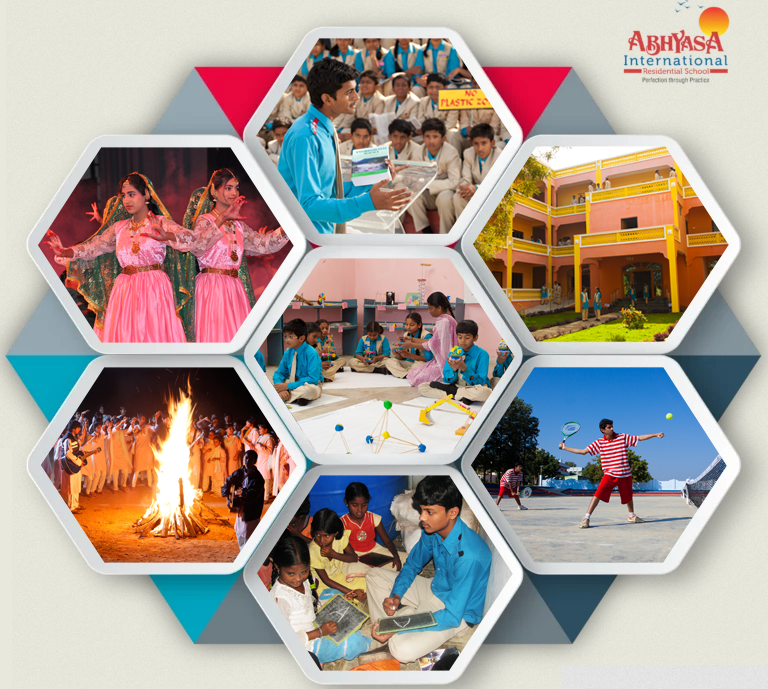
All Round Personality Development
“The winners of the 21st Century, will be those who can transform themselves into a wheel - which is lean, mean, highly manoeuvrable and can drive on any terrain, with any vehicle and in any climate” said Peter Drucker the Father of Business Management. Abhyasa’s curriculum revolves around this concept!
If an individual’s personality is visualized as a wheel - at its core is the pivot with the strength of confidence and stability of character. The large outer rim in the exterior is an expression of the person’s creative potential. Knowledge, skills and aptitudes constitute the numerous spokes, which connect the core with the rim.
The outer rim moves a wheel ahead, while the pivot is stable to balance it! Creativity, technology, lifestyles change with time, but character (values) are timeless. The rim and spokes add visible beauty to the wheel, as talents and skills to a personality. However beautiful the wheel (personality) may be, without the strength of the pivot (character) it would just crumble to pieces!
Abhyasites are therefore taught not only the secrets of achieving success, but also the ethics of managing success. ABC’s here are taught as: Always Be Careful and Always Be Cheerful - which is a simplified summary of all values necessary for life. A Holistic Education integrates a child’s thoughts, words and deeds at its core before developing all-round skills in it.
A unique child-centered curriculum offers a wide range of activities that discovers an individual’s talents and moulds a genius out of every child! Abhyasa is a melting pot of Science and Spirituality, Commerce and Common-sense, Creativity and Conformity, Learning and Unlearning too… that prepares an individual not only for a living but also for life!
Abhyasa is sensitive to the demands of childhood. If a child lives with recognition, it learns to have a goal and if it lives with encouragement, the child grows up to be a confident person. We do not measure Intelligence Quotient (IQ) numerically but value it individually by a child’s ability - be it Linguistic or Naturalistic or Kinesthetic (physical) or Artistic and so on…
Physical Activities & Objectives
Objectives
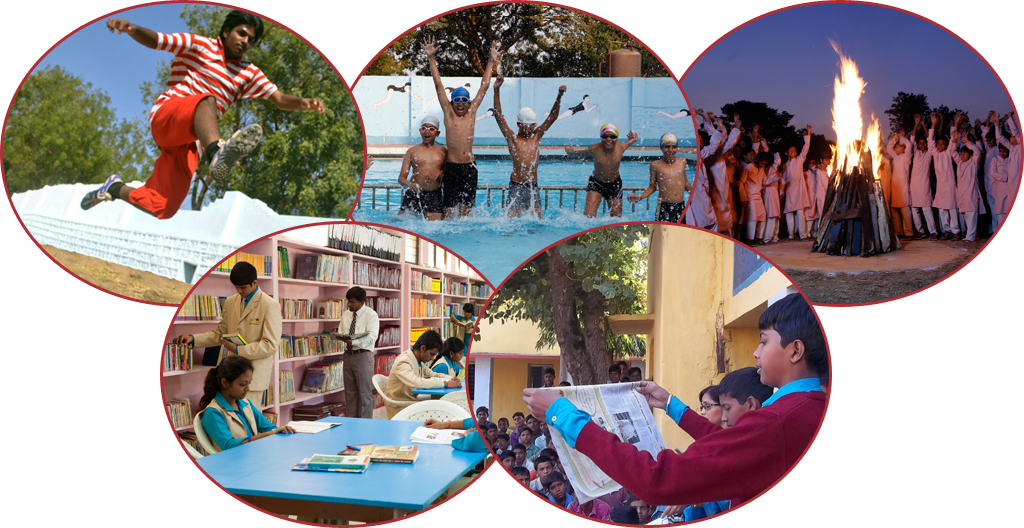
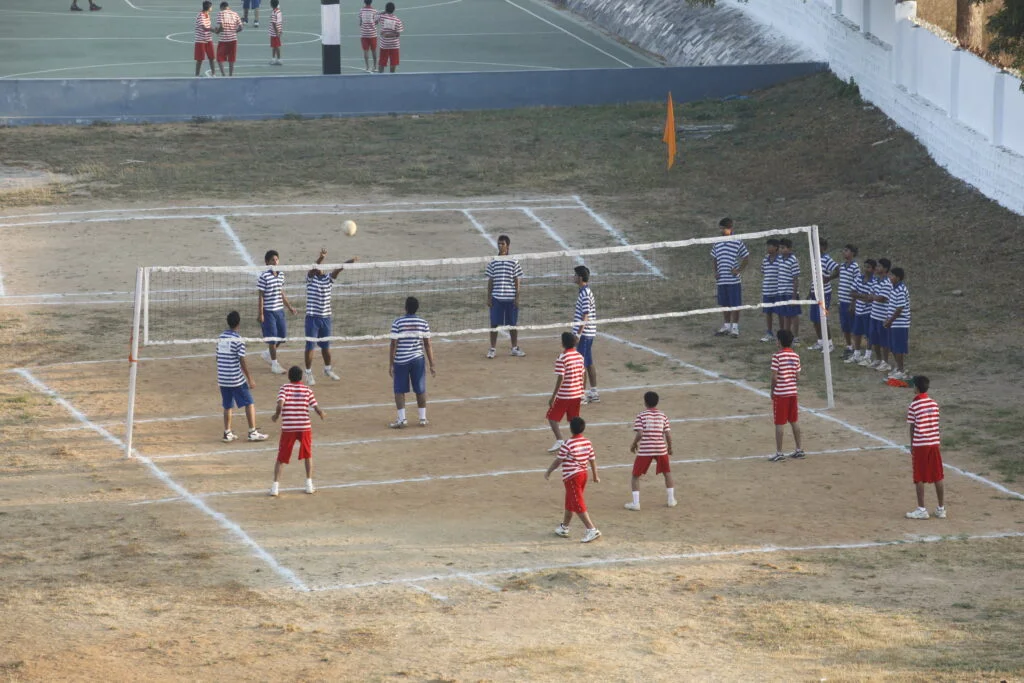
Enhance the physical quotient of the students by making them physically fit, strong, healthy and dexterous, while preparing them for growth and survival in a competitive world. Make them agile and efficient for hard work and effective instruments for the achievement of their life’s objectives.
A high physical quotient ensures a strong, perseverant and alert mind - so that the basic mental abilities of cognition, concentration, comprehension, recollection, reflection and reflex action would be fine-tuned to further aid higher intellectual processes in the child.
Activities
Games and Sports
- Swimming
- Athletic Runs
- Throws
- Jumps
- Cricket
- Foot Ball
- Basket ball
- Tennis
- Shuttle
- Badminton
- Volley Ball
- Kho Kho
- Chess
- Tennikoit
- Carroms
- Kabbadi
- Table Tennis
- Skipping
- Inter-School Competitions
- Sports Festival
- Fun Games for Staff and Helpers
Adventure and Physical Training
- Pranayama
- Yoga
- Cross Country Runs
- Martial Arts
- Nature Walks & Jogging
- March Past
- Fitness Exercises
- Gymnastics
- Trekking
Intellectual Activities & Objectives
Objectives
Train students to enquire into the nature of events and existence; Guide them to analyse the how and why of occurrences, correlate facts, integrate information, synthesize knowledge, skills and values into applications, filter before a judgment and weigh the outcomes before considering them
Motivate children to critically question existing beliefs, identify new problems that need creative solutions and develop intuitive insights into unfathomable phenomena. Constantly innovate for beneficial application to life, and above all, enable them to effectively communicate all that they think and feel!
Activities
Intellectual Exercises
- Live observations
- Memorization Techniques
- Quiz
- Reading and recitation skills
- Seminars
- Current Affairs
- Newspaper in Education
- Multimedia Learning
- Viva voce
- Computer-aided Classes
- Projects and Surveys
- Workshops
- Aptitude and Achievement Tests
- Institutional Visits
- Field Studies
- Group Discussions
- Case studies
- Commerce Fest
Creative and Communication Skills
- Debates
- Dramatization and Theatre in Classroom
- Interaction with Experts
- Abacus and Mental Math Training
- Spelling Bee and Word-building Games
- Laboratory Practicals
- Literary Appreciation and Expression through Poetry etc.
- Science and Math Fests
- Phonetics and Communication Skills
- Creation of Working Models and Scientific Exhibits
Artistic Activities & Objectives
Objectives
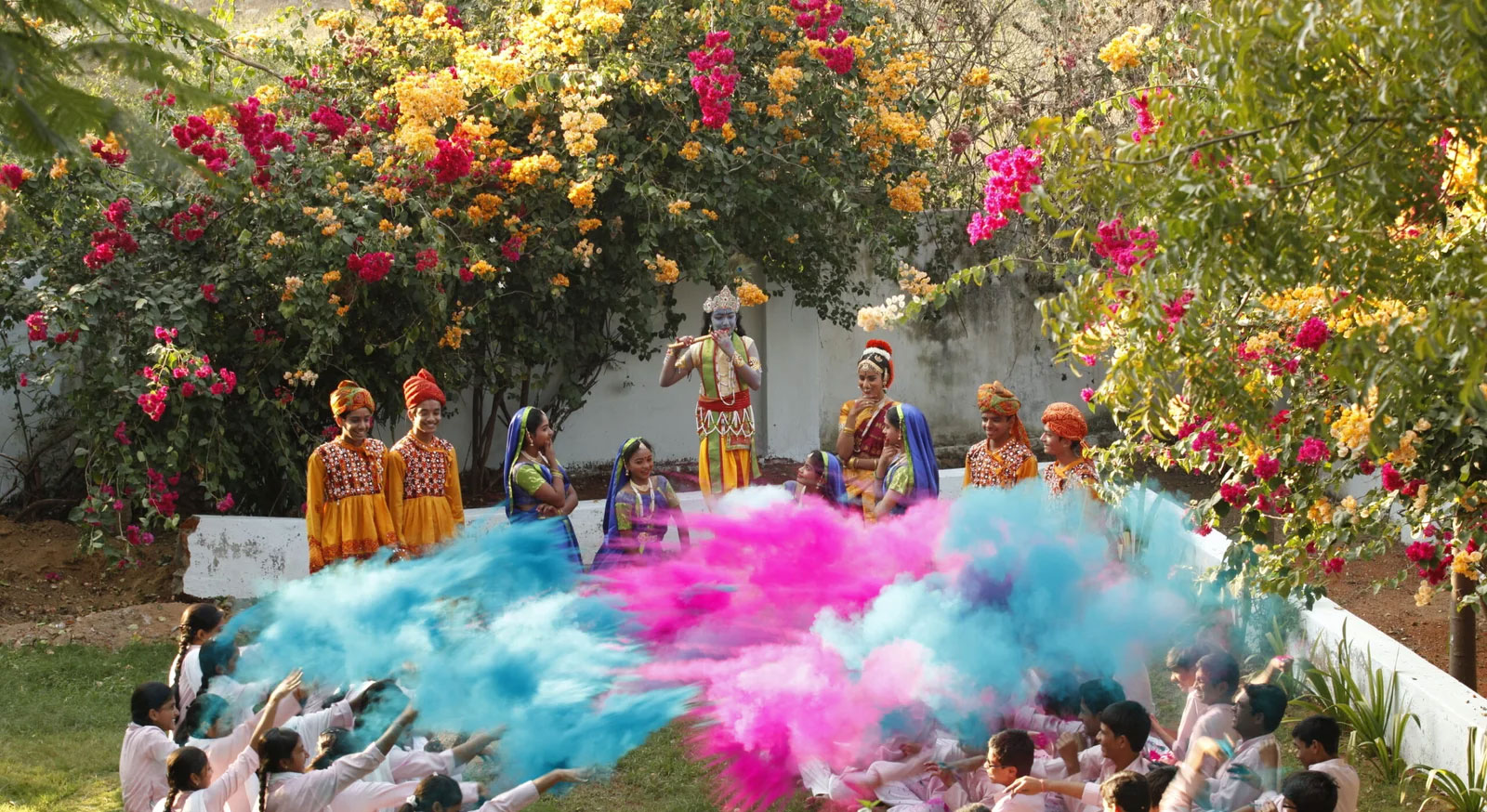
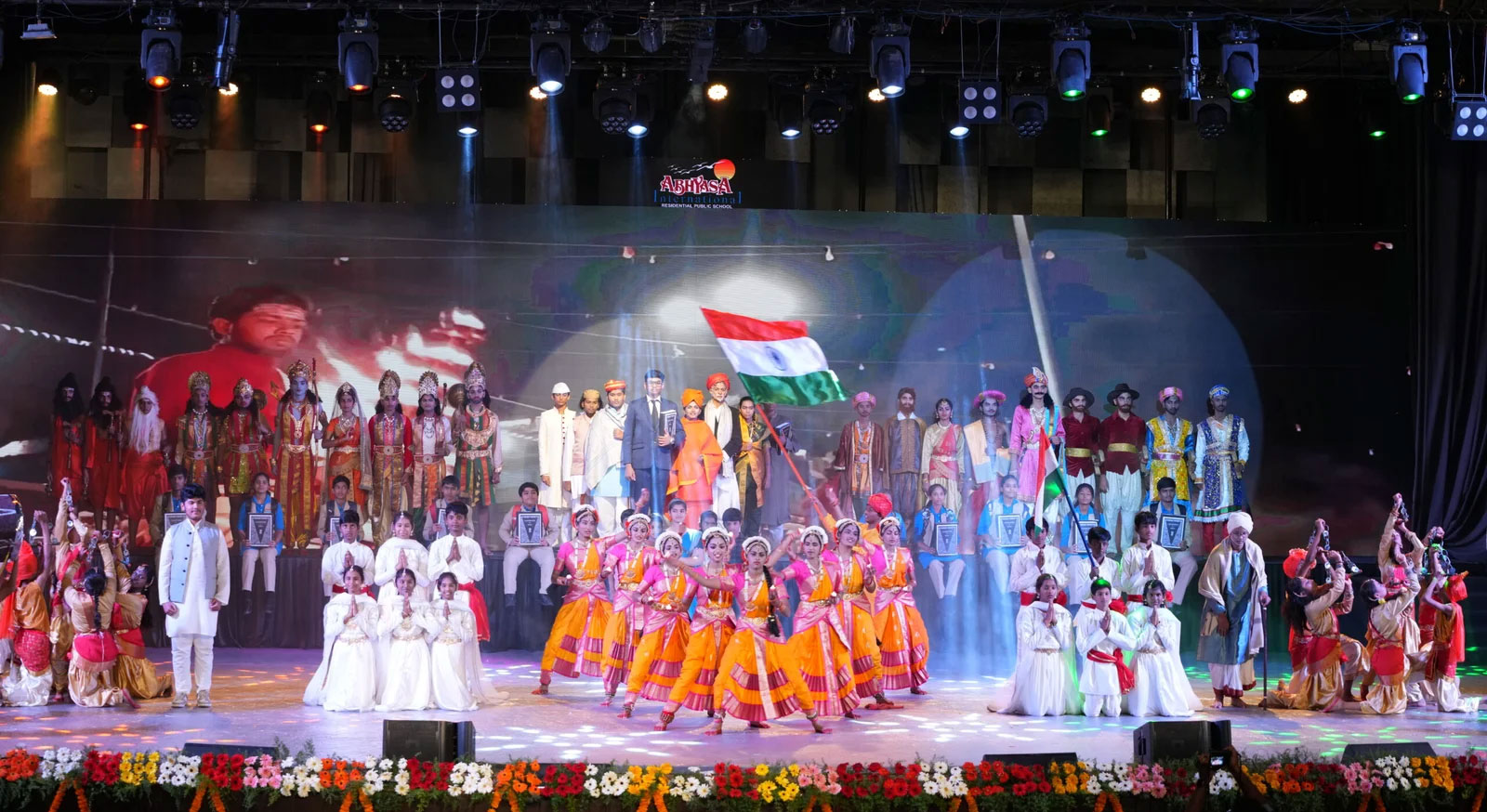
Facilitate students to experience the beauty of colors, enjoy the melody in sounds, wonder at the rhythm and symmetry of shapes. Make them aesthetically alive by induction into various arts - so that they develop graceful expression through dance, feel the ecstasy of music, emote through drama and express their abstract feelings through painting.
Enable students to experience the rich and vibrant Indian culture in all its facets through festivals, food, attire and art forms so that they internalize a culture that reflects their identity, respects their self-esteem and binds them with their fellow men and women in a diverse pluralistic society not only in India, but in the global context too!
Activities
Integrating Hands, Head and Heart
- Painting
- Puppetry
- Pottery
- Clay modeling
- Rangoli
- Dramatics
- Classical Dance
- Craft
- Vocal and instrumental Music
- School Band
- Poetry Composition
- Weekly Wall Magazines
- Photography
- Mehendi Design
Cultural Activities on Campus
- Founding Day
- Investiture Ceremony
- Guru Poornima
- Raksha Bandhan
- Krishna Janmashtami
- Independence Day
- Ganesh Chaturthi
- Teacher’s Day
- Navaraathri
- Id-ul-Fitr
- Children’s Day
- Primary School Concert
- Sri Satya Sai Baba’s Birthday
- Christmas
- New year
- School Cultural Nite
- Literary Festival
- Republic Day
- Shivaratri
- Holi
- Arts and Crafts Exhibition
- Inter-School Science Fest
- Valedictory Function
Social Activities & Objectives
Objectives
Enhance students by making them behaviorally refined and morally forthright by imbibing self-discipline, self-confidence, self-esteem, along with apt etiquette and essential life skills. Inculcate inter-personal skills that foster mutual co-operation, respect for authority, loyalty towards family, friends and fellow citizens with a sense of responsibility that makes them sensitive towards the society and the environment.
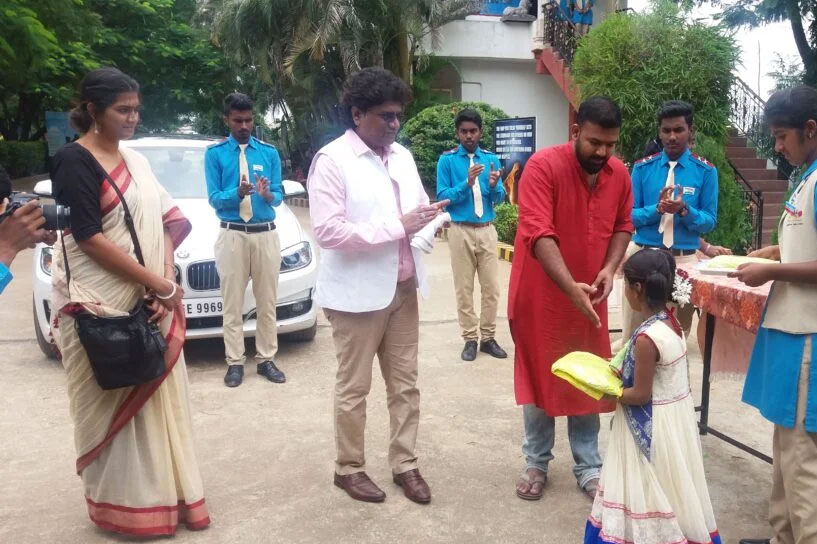
Train students to be self-reliant, hardworking, resourceful and industrious for achieving perfection in all tasks that they undertake. Teach them to appreciate diversity in cultures and religions and adapt a harmonious collective living. Induct practical thinking, general awareness, managerial abilities and leadership skills that aid them in goal setting for career and life..
Activities
- Interaction with Eminent Personalities
- Elocution
- Picnics
- Self-reliance Programme
- Career Guidance
- Inter-school Festivals & Competitions
- Dramatics
- Out Station Excursions
- Camp Fire Interactions
- Assembly Talks
- Team-building Games such as Dumb Charades, Fish Bowl etc.
- Talent Search Activities
- Mock Interviews
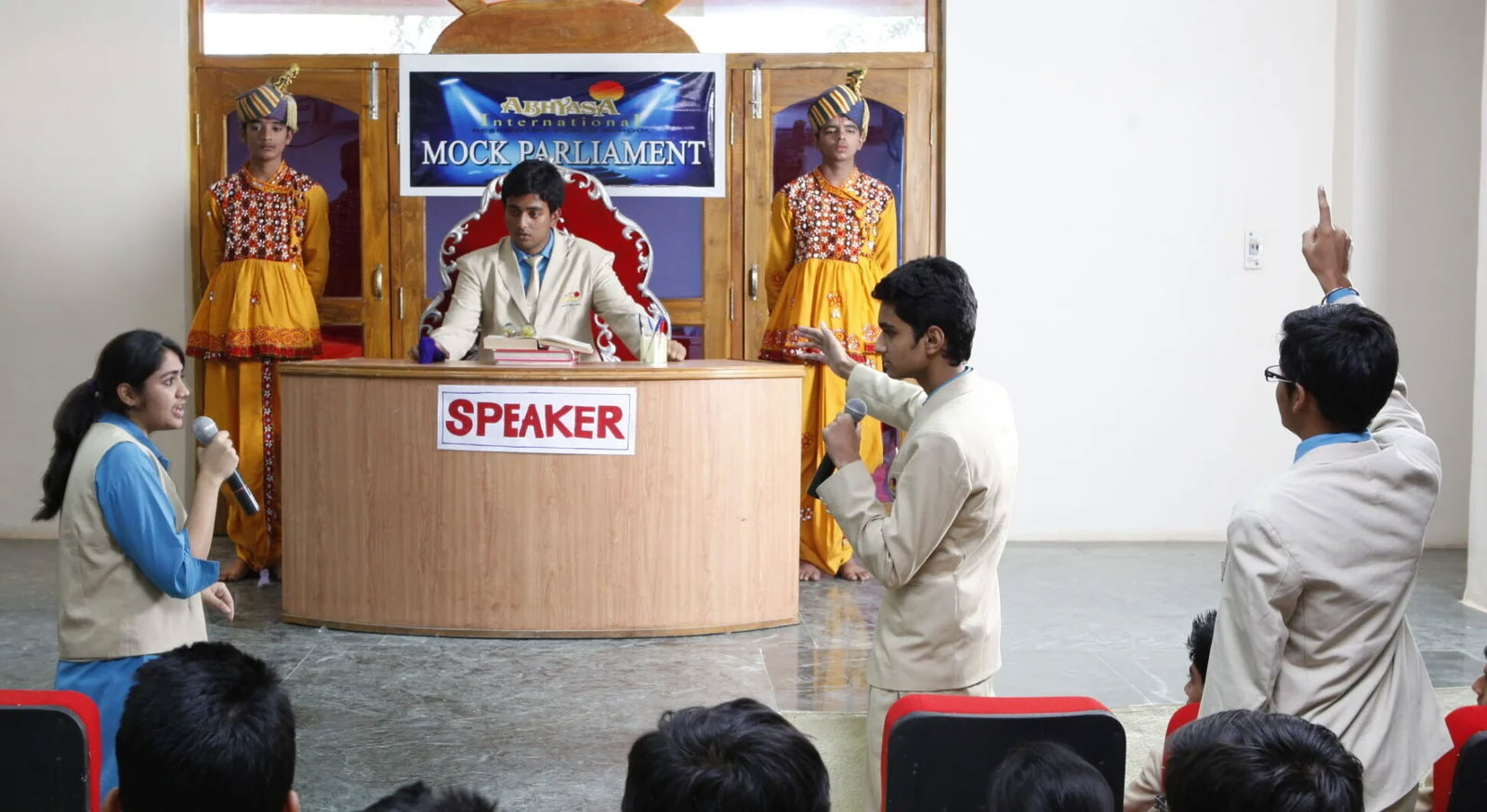
- Mock parliament
- School Departments’ Management
- Student Club Activities
- Market Surveys
Social Responsibility
Cultural Activities on Campus
- Socially Useful Productive Work (SUPW)
- Campus Maintenance
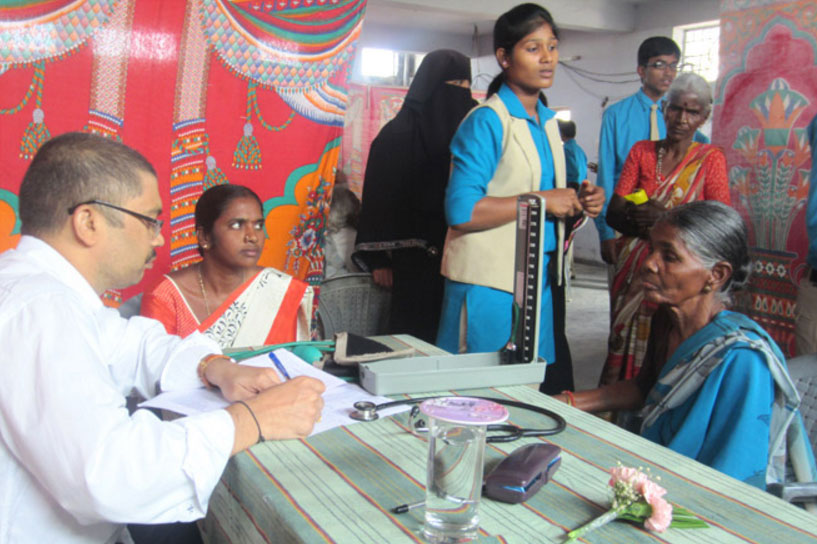
- Rural Medical Camps
- Leadership Training
- Visit to Old-age Homes
- AIDS Awareness Campaigns
- Eradication of Child Labour
- Rural Upliftment Programmes
- Visit to Old-age Homes
- AIDS Awareness Campaigns
- Eradication of Child Labour
- Rural Upliftment Programmes
- Life Skills Training
- Green Corps - Environment Programme
- Adult Education
Spiritual Activities & Objectives
Objectives
Strengthen the emotional quotient of students by constantly guiding them in conflicting situations to choose the appropriate reaction such as - empathy vs. endurance; poise vs. humor; rationale vs. devotion; criticism vs. appreciation; dignity vs. humility; outrage vs. patience; wonder vs. insight; courage vs. compassion; velour vs. composure; determination vs. detachment and so on.
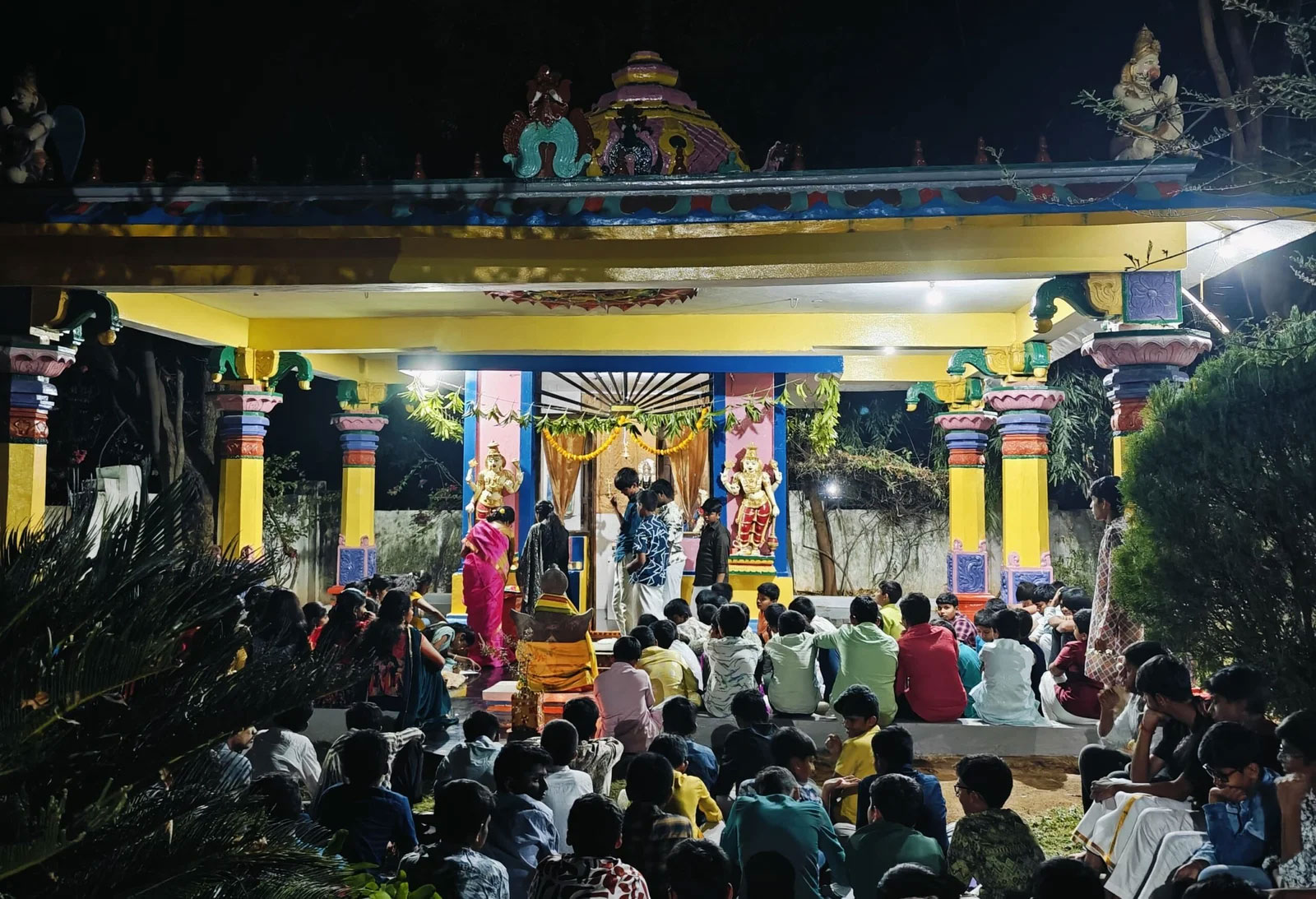
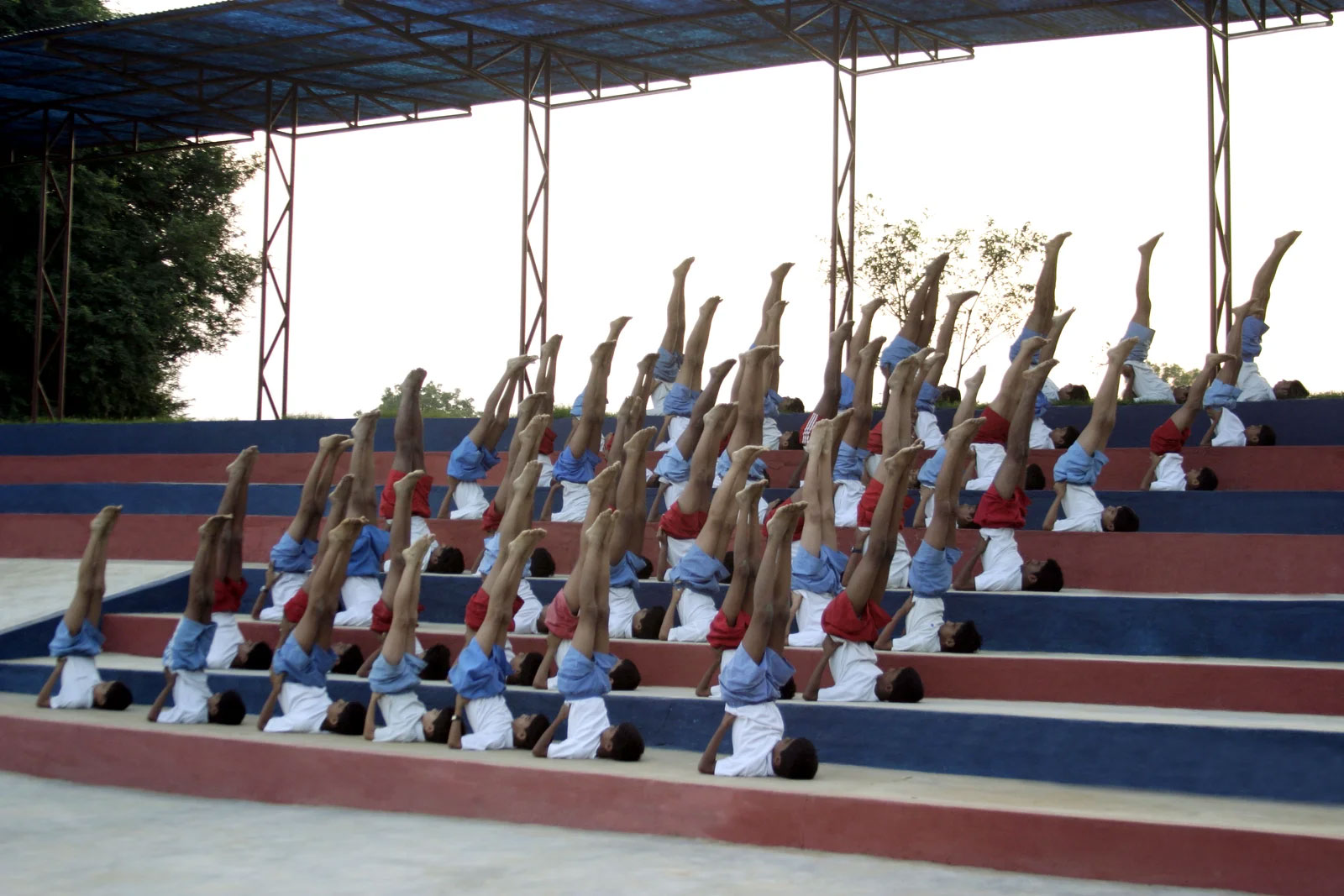
Endow them with the wisdom of discrimination, intuition of right action and values that harmonize intentions, words and actions. Induct students into the process of self-enquiry through introspection, discussion and meditation to understand the basic spiritual truths of existence: Who am I? Why am I here? Where am I going? Experience the ecstasy of being, Develop equanimity to accept all outcomes and serve everyone, with love!
Activities
Spiritual Enrichment
- Daily Prayers and Assembly Talks
- Thought for the Day
- Circles of Confidence - Discussions on Ethical and Spiritual Issues
- Bhajan Singing
- Pranayama and Meditation
- Vedic Chanting or Quran recitation
- Spiritual Talks by learned Personalities
- Role plays
- Moral Value Classes
- Classes on Indian Culture and Philosophy
Inculcation of Human Values
- Human Enrichment Programme
- Personalised Emotional Counseling
- Sensitizing neighbourhood community to de-addiction
- Caring and Sharing through Social Service Activities
- Skits on human values and Spiritual Enrichment
- Nagar Sankeerthan - Community Singing of Devotional Songs
- Promotion of Fraternity through Festivals of all Religions
Academic Curriculum
Class V
Opening their minds to new vistas:
The training process begins at the age of 9, when teaching forms strong inner images in the child’s mind along with working on the various forms of his/her active artistic creativity.
To facilitate this, class room learning is made enjoyable with multiplication tables learnt with the help of rhythmic walking and skipping; while nature is studied through characteristic gestures and movements of plants and animals. Children learn by imitating everything and everybody.
Smart Classrooms:
Classroom learning is supplemented by impressive ‘live and media’ observations. Beautiful and powerful images of multi-media presentations navigate the child’s mind through a world of fantasy. A smart classroom with plasma television and latest systems connected to a centralized server and supported by able technical staff, an internet access and more than 25000 educational CDs – apart from an Audio-Visual lab with various types of projection facilities, educational video cassettes and satellite television – aid the teaching methodology at Abhyasa.
Lessons appeal to emotions and the child is trained to feel what is learnt – outward acceptance of ideas without inwardly feeling their significance may lead to emotional or even social disturbances in future, when individuals are not trained to filter their thoughts through feelings. Therefore individuals need to develop two minds – One that thinks and the other that feels.
Thoughts and Feelings are powerful partners which will enable children shape their new world!
Class Credits
| CLASS V | |
|---|---|
| Subject | Credits |
| English | 9 |
| II Lang - Hindi / Telugu / French | 6 |
| 3rd Language - Hindi / Telugu | 4 |
| Social Studies | 5 |
| Sciences | 4 |
| Computer Science | 4 |
| Maths | 9 |
| SUPW / Social Service | 2 |
| Art & Craft | 2 |
| Dance | 1 |
| Current Affairs / Quiz | 1 |
| Music | 1 |
| NIE - Life Skills | 1 |
| Yoga | 6 |
| Sunday Specialization | 4 |
| Games & Sports | 6 |
| Total | 65 |
Note:
- Credits for each subject also correspond with the number of learning hours per week.
- SUPW: Socially Useful Productive Work.
- For more details on teaching methodology, please refer to the “School Profile” accompanying the prospectus.
- S.A – Spiritual Awareness
- NIE – Newspaper in education.
Class VI - VIII
Solving their problems through creative thinking:
The training process begins at the age of 7, when teaching forms strong inner images in the child’s mind along with working on the various forms of his/her active artistic creativity.
To facilitate this, class room learning is made enjoyable with multiplication tables learnt with the help of rhythmic walking and skipping; while nature is studied through characteristic gestures and movements of plants and animals. Children learn by imitating everything and everybody.
Smart Classrooms:
Psychological studies reveal that: Individuals remember 10% of what they hear, 20% of what they see, 40% of what they talk or discuss and 90% of what they ‘do’!
During the second stage, stress is laid on ‘doing’. The hand is trained to be skillful and the eye is schooled to observe relationships and measurements. The earlier play-way method paves way for an experiential approach, where the child actually encounters the concepts or phenomena and acquires abilities to work with materials and specimens. Learning becomes meaningful through group discussions and ‘theatre’ in classroom. Students undertake ‘live observations’ and undergo a ‘hands-on-experience’ through ploughing, sowing, harvesting in their natural environs and develop abilities that stem out of such activities.
The school has full-fledged laboratories for physics, chemistry and biology subjects – where students experiment right from class 6. Teachers follow the students’ interests, inspire originality, accept their ideas and are always available to help them learn from their mistakes.
The inter relationships between actions and objects provide a conceptual comprehension, followed by recall, reflection and imagination which strengthen the child’s memory. The encounters with natural phenomena leave a lasting impression and as students pass out of middle school, they gain abilities of skilful observation, intelligent comprehension, active recollection and creative imagination.
Class Credits
| CLASS VI | |
|---|---|
| Subject | Credits |
| English | 7 |
| II Lang - Hindi / Telugu / French | 5 |
| Geography | 3 |
| History & Civics | 4 |
| Physics | 4 |
| Chemistry | 3 |
| Biology | 4 |
| Maths | 8 |
| Computer Science | 4 |
| Art & Craft | 1 |
| SUPW / Social Service | 1 |
| Dance | 1 |
| Current Affairs / Quiz | 1 |
| Music | 1 |
| Life Skills - Personality Development | 2 |
| Yoga | 6 |
| Student Club Activities | 4 |
| Games & Sports | 6 |
| Total | 65 |
| CLASS VII | |
|---|---|
| Subject | Credits |
| English | 7 |
| II Lang - Hindi / Telugu / French | 5 |
| Geography | 3 |
| History & Civics | 4 |
| Physics | 4 |
| Chemistry | 3 |
| Biology | 4 |
| Maths | 8 |
| Computer Science | 4 |
| Art & Craft | 1 |
| SUPW / Social Service | 1 |
| Dance | 1 |
| Current Affairs / Quiz | 1 |
| Music | 1 |
| Life Skills - Personality Development | 2 |
| Yoga | 6 |
| Student Club Activities | 4 |
| Games & Sports | 6 |
| Total | 65 |
| CLASS VIII | |
|---|---|
| Subject | Credits |
| English | 7 |
| II Lang - Hindi / Telugu / French | 5 |
| Geography | 3 |
| History & Civics | 4 |
| Physics | 4 |
| Chemistry | 3 |
| Biology | 4 |
| Maths | 8 |
| Computer Science | 4 |
| Art & Craft | 1 |
| SUPW / Social Service | 1 |
| Dance | 1 |
| Current Affairs / Quiz | 1 |
| Music | 1 |
| Life Skills - Personality Development | 2 |
| Yoga | 6 |
| Student Club Activities | 4 |
| Games & Sports | 6 |
| Total | 65 |
Note:
- Due importance is given to the acquisition of ‘logistic skills” and ‘numerical abilities’. Hence special attention is given to the practice of Mathematics every day.
- Credits for each subject also correspond with the number of learning hours per week.
- SUPW: Socially Useful Productive Work.
- For more details on teaching methodology, please refer to the ” School profile ” accompanying the brochure.
- SA – Spiritual Awareness.
- NIE – Newspaper in education.
Class IX - XII
Developing their emotional intelligence:
The intellect comes into play when the student passes through adolescence. The individual travels from polarity to contrast, from analysis to synthesis and so on. Various concepts which were earlier ‘analysed to understand’ are now ‘synthesized to draw conclusions’. At this stage, the student is challenged to work independently to cultivate skills of individual judgment through research, dissertations, projects, seminars and viva presentations. This is the culmination of all thinking processes. The teacher’s metamorphosis from an ‘authority with love’ to an ‘experienced friend’. They are involved in the students’ learning process and intensely interested in everything that the teenager is curious about – such as problems of the times and life.
While concepts and logic constitute the thinking mind, feelings and emotions recorded in the child’s subconscious, constitute the emotional intelligence (EI). EI is an expansion of the intellect and guides the thinking mind where to look next through language of feeling and mental images.
Most successful business and political leaders have often relied on EI to perceive solutions to problems which the logical mind failed to solve. Such perception, known as intuitive insight consolidates much later after the student leaves school. But seeds for the same are sown during childhood… and Abhyasa is fully geared to develop ‘complete individuals’ by fostering and integrating various types of intelligence.
Class Credits
| CLASS IX – X – ICSE | |
|---|---|
| Subject | Credits |
| English I | 4 |
| English II | 3 |
| II Lang – Hindi / Telugu / French | 4 |
| Geography | 3 |
| History & Civics | 3 |
| Physics | 3 |
| Chemistry | 3 |
| Biology | 4 |
| Maths | 9 |
| Commercial Applications | 5 |
| SUPW / Social Service | 1 |
| Debate | 1 |
| Elocution | 1 |
| Group Discussion | 1 |
| Creative Writing | 1 |
| Quiz | 1 |
| Life Skills - Personality Development | 1 |
| Yoga | 6 |
| Student Club Activities | 4 |
| Games & Sports | 6 |
| Total | 65 |
| CLASS XI – XII – Commerce | |
|---|---|
| Subject | Credits |
| English I | 3 |
| English II | 3 |
| Commerce | 5 |
| Accounts | 11 |
| Economics | 5 |
| Business Studies | 4 |
| Maths | 11 |
| SUPW / Social Service | 1 |
| Debate | 1 |
| Elocution | 1 |
| Group Discussion | 1 |
| Creative Writing | 1 |
| Quiz | 1 |
| Personality Development | 1 |
| Yoga | 6 |
| Student Club Activities | 4 |
| Games & Sports | 6 |
| Total | 65 |
| CLASS XI – XII – Science | |
|---|---|
| Subject | Credits |
| English I | 3 |
| English II | 3 |
| Physics | 7 |
| Chemistry | 7 |
| Biology | 7 |
| Maths | 11 |
| Electricity & Electronics | 4 |
| SUPW / Social Service | 1 |
| Debate | 1 |
| Elocution | 1 |
| Group Discussion | 1 |
| Creative Writing | 1 |
| Quiz | 1 |
| Personality Development | 1 |
| Yoga | 6 |
| Student Club Activities | 4 |
| Games & Sports | 6 |
| Total | 65 |
Note:
- Due importance is given to the acquisition of ‘logistic skills” and ‘numerical abilities’. Hence special attention is given to the practice of Mathematics every day.
- Credits for each subject also correspond with the number of learning hours per week.
- SUPW: Socially Useful Productive Work.
- For more details on teaching methodology, please refer to the ” School profile ” accompanying the brochure.
- SA – Spiritual Awareness.
- NIE – Newspaper in education.